


- Lead News
- Financial
The EC4J project has become one of the country's major industrial development initiatives, creating 180,000 new jobs.
- লিড নিউজ
- Financial

Photo: Collected
News Desk: Aiming to diversify exports by reducing over-reliance on the ready-made garment (RMG) sector, the Ministry of Commerce's 'Export Competitiveness for Jobs (EC4J)' project has turned into one of the country's most successful industrial development initiatives. Through this project, the competitive edge of leather and leather goods, footwear, plastics, and light engineering sectors has improved significantly. At the same time, nearly 180,000 new and decent jobs have been created, strengthening Bangladesh's position in the global value chain.
Financed by the International Development Association (IDA) of the World Bank, the Ministry of Commerce launched the project in July 2017. The initiative was taken considering export diversification as a national priority in preparation for the country's graduation from Least Developed Country (LDC) status and to withstand competition in international markets. When the project began, over 80 percent of the country's total export earnings came from the RMG sector, leaving the economy heavily dependent on a single industry.
Against this backdrop, the EC4J project was implemented with the objective of elevating four potential manufacturing sectors to international standards, increasing productivity, and building the capacity to access new export markets.
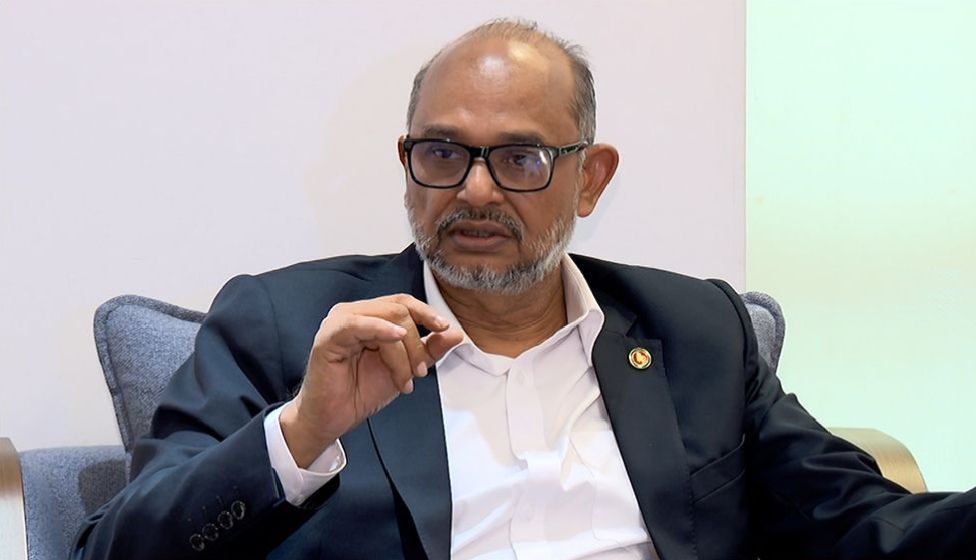
Project Director and Joint Secretary of the Ministry of Commerce, Sheikh Mohammad Abdur Rahman, told the media that the project has exceeded its target in almost all major performance indicators and has built a sustainable foundation for long-term industrial competitiveness.
He said the project's goal was not merely to increase exports, but to empower Bangladeshi industries to compete globally and generate quality employment. The project's outcomes prove that providing targeted support to export-oriented industrial enterprises makes rapid sector transformation possible.
Abdur Rahman noted that the most effective initiative under the project was the 'Export Readiness Fund (ERF)'. Under this matching grant program, 570 enterprises—including women-led enterprises—received financial and technical assistance. Through this support, companies achieved international standards regarding environmental, social, and quality compliance (ESGQ), upgraded skills, modernized production management, earned international certifications, and gained entry into new foreign markets.
According to project data, beneficiary enterprises earned 260 international compliance certificates. Simultaneously, ERF leveraged over $18 million in co-investment from the private sector, which encouraged additional private investment alongside government funding.
Sales of project-covered companies surged by 59 percent, far surpassing the initial target of 15.4 percent. Furthermore, these companies entered 22 new international markets.
Prior to the project's launch, only 59 percent of beneficiary companies were exporters; that proportion rose to 95 percent. Over the same period, their average export volume grew by 192 percent.
Additionally, 73 Bangladeshi companies were given the opportunity to participate in 14 international sourcing exhibitions, opening avenues for new business partnerships and export opportunities.
Beyond financial aid, the EC4J project invested heavily in upgrading industrial infrastructure and technological capability. Under its umbrella, the Bangladesh Institute of Plastics Engineering and Technology (BIPET) was fully established and is currently running industry-based training programs.
Furthermore, construction of the Center of Excellence for Engineering and Technology (CEET) in Kaliakair High-Tech City, Gazipur, and the Design and Technology Center for Leather Goods and Footwear (DTCLGF) in Kashimpur, Gazipur, has been completed.
To further strengthen the foundation of future industrialization, land acquisition and site development work have been completed for the proposed Institute of General Engineering and Technology (IGET) at the BSCIC Chemical Industrial Park in Sirajdikhan, Munshiganj, and the proposed International Institute of General Engineering and Technology (IIGET) at the National Special Economic Zone (NSEZ) in Mirsarai, Chattogram.
The Project Director noted that these institutions will play a crucial role in developing advanced technology services, product development, laboratory facilities, and a skilled workforce for export-oriented industries.
According to a World Bank report, the project directly benefited over 107,000 people through training on skill development, workplace safety, and compliance—38 percent of whom are women.
The World Bank estimates that overall, the initiative created nearly 180,000 new and decent jobs, almost three times the initial target of 60,000.
Highlighting the World Bank's evaluation, Abdur Rahman stated that the development partner cited the EC4J project as an exemplary model of successful public-private partnership in export diversification and job creation.
World Bank data shows that between 2016 and 2023, exports from non-garment sectors covered under the project grew by nearly 83 percent, significantly outperforming the initial target.
The report added that an innovative aspect of the project was its grant management system. An internationally recruited independent third party managed the selection of beneficiary firms, monitored project execution, and oversaw fund disbursements based on verified progress. This ensured accountability while encouraging private sector investment.
The World Bank emphasized that when technical assistance, skill development, and awareness programs are integrated alongside financial incentives, industrial enterprises progressively meet global standards—a truth demonstrated by the success of the EC4J project.
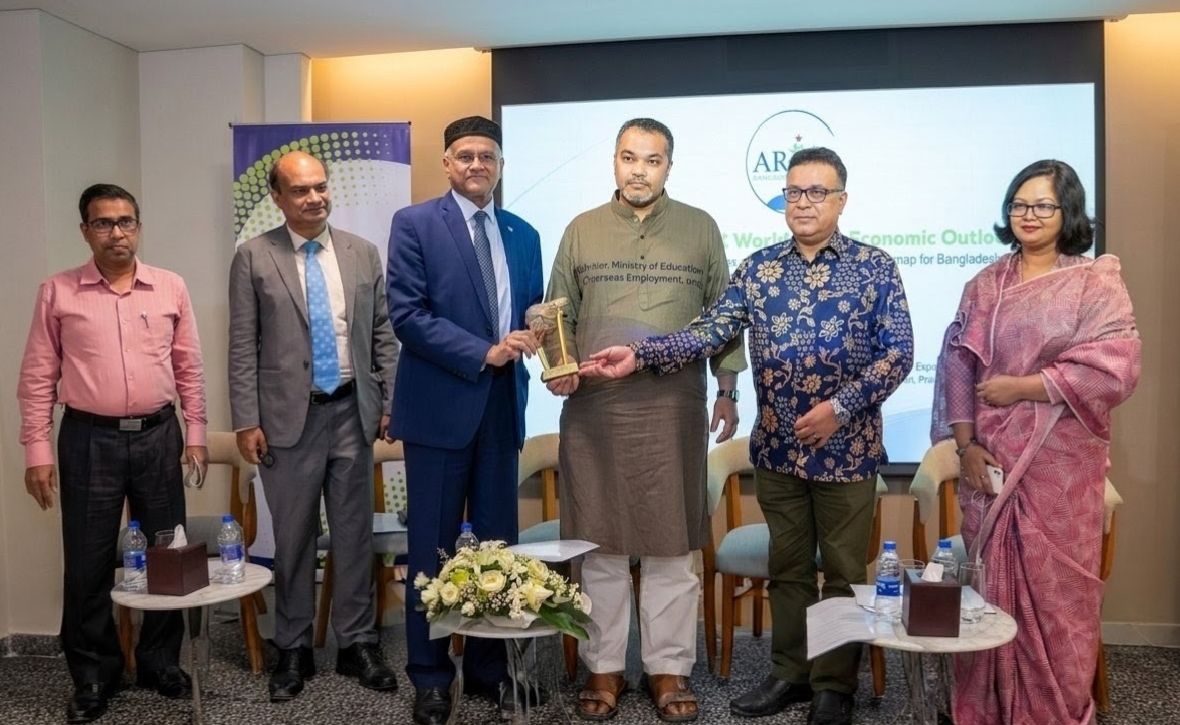
Bangladesh-GCC Dialogue Calls for Shift from Manpower Exp...
1
Staff Correspondent: ARISE Bangladesh Foundation organised a...
Remittances reached Tk 32,828 crore in 29 days.
2
English Translation (News Style)
News Desk: Bangladesh received US$2.669 billion in ...
Bangladesh to surpass Malaysia, Vietnam, and Thailand in ...
3
International Desk: The International Monetary Fund (IMF) has projected that ...

August remittances surge 25.52% in first 22 days
4
Expatriate Bangladeshis sent $2.148 billion in remittances to the country dur...
Final-stage work is underway to implement the pay scale: ...
5
News Desk: Final-stage work is underway to implement the new pay scale f...



মন্তব্য (0)