
- Lead News
- Diplomatic News
Egypt’s National Day Celebration Reinforces Enduring Friendship with Bangladesh
- লিড নিউজ
- Diplomatic News
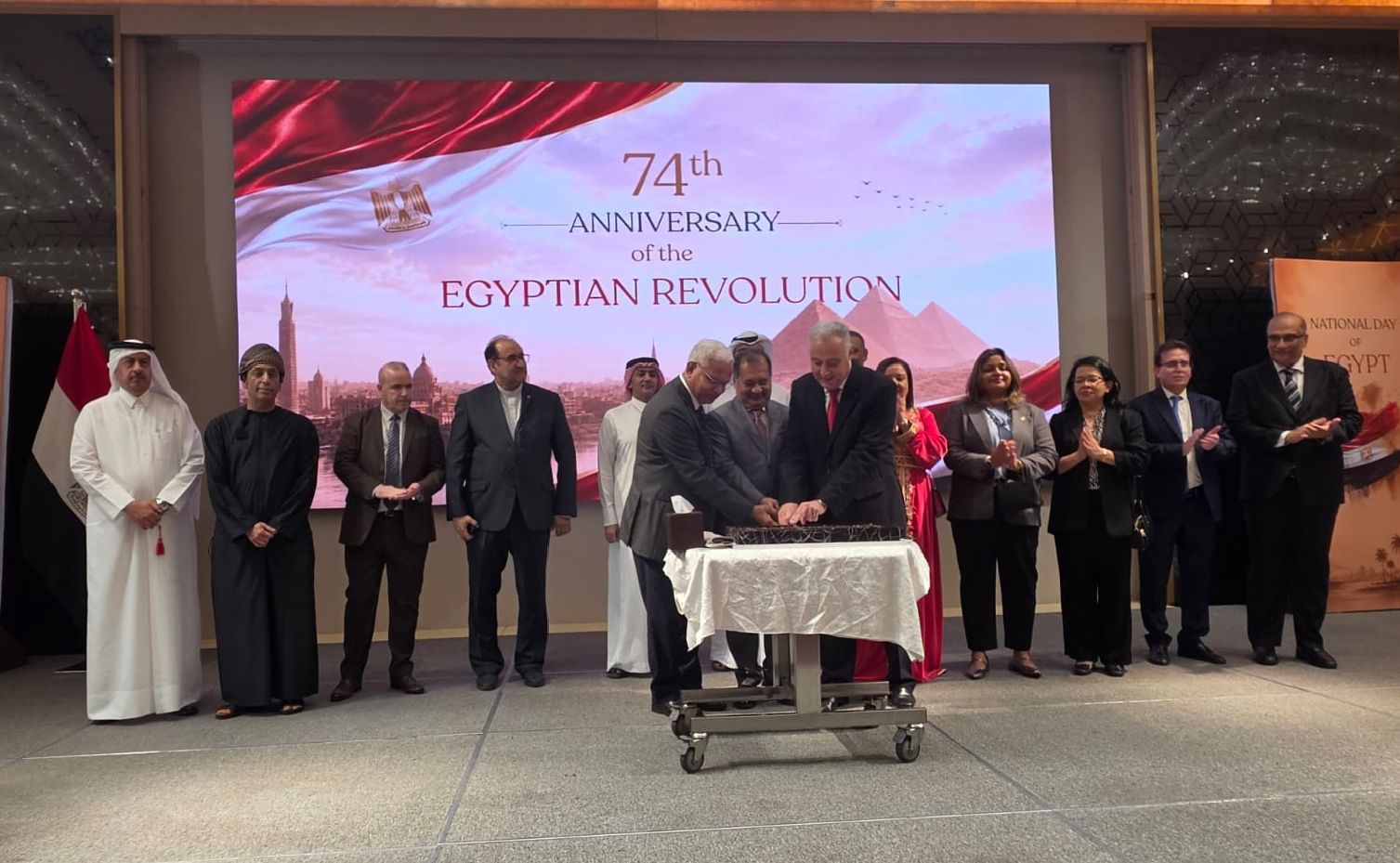
Photo: CNI
Diplomatic Correspondent: The Embassy of the Arab Republic of Egypt in Bangladesh hosted a diplomatic reception in Dhaka to celebrate Egyptian National Day 2026 and the 74th anniversary of the historic Revolution of 23 July 1952.
H.E. Mr. Omar Mohie Eldin Ahmed Fahmy, Ambassador of the Arab Republic of Egypt to Bangladesh, welcomed the distinguished gathering, which included Professor Dr. A.Z.M. Zahid Hossain, Minister for Social Welfare and Women and Children Affairs, senior government officials, ambassadors, members of the diplomatic community and other prominent guests.
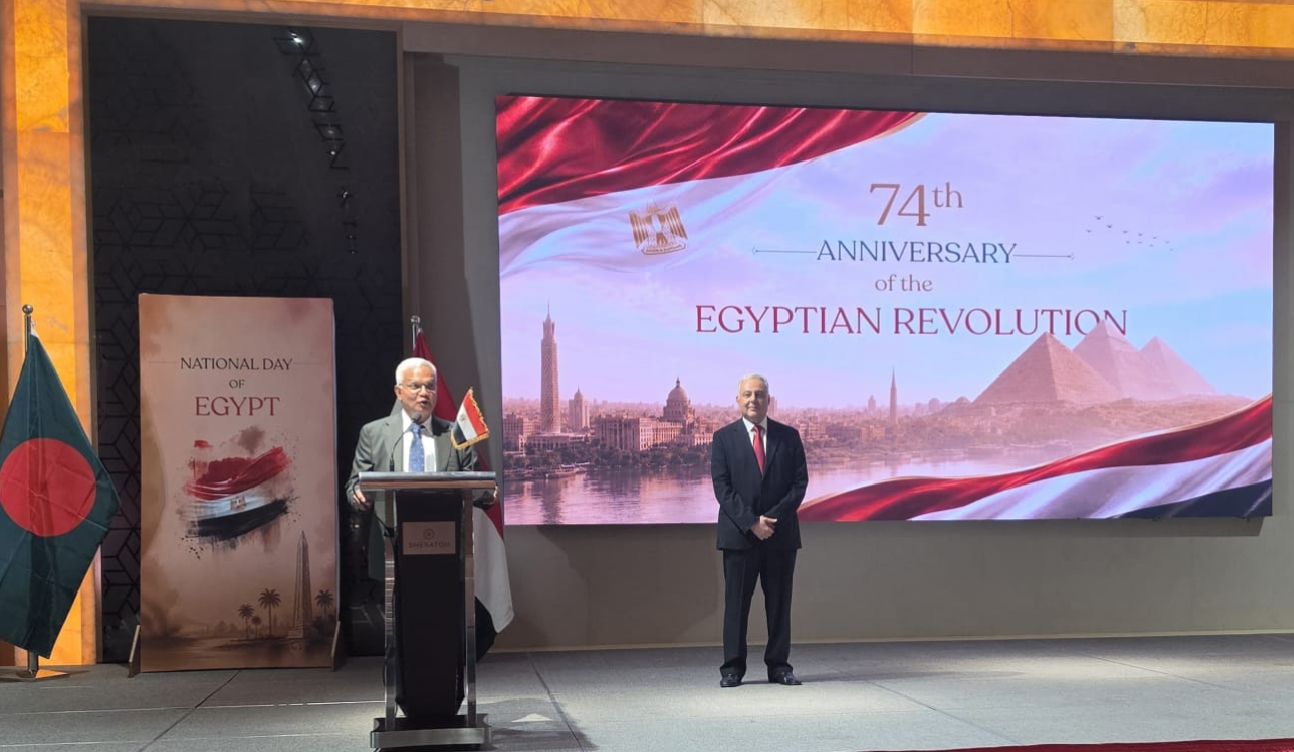 In his address, Ambassador Fahmy reflected on the historical importance of the 1952 Revolution, describing it as a defining moment in Egypt’s modern history. The revolution brought an end to the monarchy, paved the way for the establishment of the republic and advanced the national objectives of ending foreign influence, combating corruption, promoting social justice and strengthening Egypt’s political, economic and defence institutions.
According to the ambassador, the principles of sovereignty, national dignity and confidence in the future that inspired the revolution continue to guide Egypt’s development today.
Congratulations to Bangladesh’s New Government
Ambassador Fahmy extended Egypt’s warm congratulations to the Government and people of Bangladesh following the parliamentary elections held earlier in 2026.
He wished Prime Minister Tarique Rahman, his government and the people of Bangladesh success as the country entered a new phase of political and national development. Tarique Rahman assumed office as prime minister in February 2026 following the parliamentary election.
The ambassador expressed confidence that the aspirations of the people of Bangladesh would continue to advance under the country’s new leadership. He also reaffirmed Egypt’s readiness to work closely with the new government to deepen bilateral cooperation.
More Than Five Decades of Friendship
The National Day celebration also provided an opportunity to commemorate 52 years of diplomatic relations between Egypt and Bangladesh.
Egypt was among the early Arab countries to recognise Bangladesh, and formal relations between the two countries developed rapidly in 1974. The historic visit of Egyptian President Anwar El-Sadat to Dhaka on 25 February 1974 remains an enduring symbol of Egypt’s solidarity with the newly independent Bangladesh. President Sadat was the first head of an Arab state to visit the country following its independence.
Ambassador Fahmy observed that the relationship had grown considerably since that historic period. What began as a bond of political solidarity has developed into a multidimensional partnership encompassing diplomacy, trade, investment, education, culture, judicial cooperation, religious dialogue, defence, security, connectivity and multilateral engagement.
More importantly, he said, the partnership is sustained by an expanding network of human connections between the Egyptian and Bangladeshi peoples.
Sustained Diplomatic and Institutional Engagement
The ambassador highlighted the continuity of political dialogue and institutional cooperation between Cairo and Dhaka.
An important recent milestone was the second Bilateral Foreign Office Consultations, held at Egypt’s Ministry of Foreign Affairs in the New Administrative Capital on 6 February 2025. The consultations reviewed cooperation in political and economic affairs, trade, investment, education, agriculture, food security, aquaculture, shipbuilding, defence and people-to-people connectivity. The two countries also agreed to work towards establishing a bilateral business forum.
Ambassador Fahmy also referred to expanding judicial exchanges between the two countries. Such institutional engagement, he said, demonstrates the commitment of both governments to building a relationship supported not only by diplomatic goodwill but also by practical cooperation between national institutions.
Cooperation in Global Affairs
Egypt and Bangladesh continue to cooperate closely in international and regional organisations, including the United Nations, the Organisation of Islamic Cooperation, the Developing Eight Organisation for Economic Cooperation and the Non-Aligned Movement.
The ambassador said both countries support peaceful dialogue, sustainable development, stronger multilateral institutions and greater representation for developing nations in international decision-making.
He highlighted the countries’ mutual support for their respective candidates in international organisations. Bangladesh supported Egypt’s Dr. Khaled El-Enany, who was elected Director-General of UNESCO in November 2025 and became the first person from an Arab country to lead the organisation.
Egypt, in turn, supported Bangladesh Foreign Minister Dr. Khalilur Rahman, who was elected president of the 81st Session of the United Nations General Assembly in June 2026. Ambassador Fahmy congratulated Dr. Rahman on his election, describing the achievement as an important recognition of Bangladesh’s diplomatic standing.
Rapid Growth in Bilateral Trade
Economic cooperation occupied a prominent place in the ambassador’s address.
According to Ambassador Fahmy, the volume of bilateral trade between Egypt and Bangladesh increased from approximately US$160 million to nearly US$500 million within two years. He described the increase as evidence of growing confidence between the two countries’ governments and business communities.
Egypt has traditionally supplied Bangladesh with petrochemicals, fertilisers and other industrial products, while Bangladeshi textiles, ready-made garments, jute and related products have established a growing presence in the Egyptian market.
The ambassador said the current trade figures should be regarded as the beginning of a much larger economic relationship. Greater private-sector engagement, direct business contacts, investment promotion and cooperation in manufacturing could create new opportunities for employment, innovation and sustainable growth in both countries.
Al-Azhar as a Bridge of Knowledge
Education remains one of the strongest pillars of Egypt–Bangladesh relations.
Ambassador Fahmy emphasised the special role of Al-Azhar University, one of the world’s oldest and most respected centres of Islamic scholarship. Responding positively to a request from the Government of Bangladesh, Egypt increased the number of annual scholarships for Bangladeshi students from 12 to 24.
More than 1,000 Bangladeshi students are currently pursuing their education at Al-Azhar institutions across Egypt, the ambassador said.
These students represent an important human bridge between the two nations. Through education, academic exchange and religious scholarship, they contribute to mutual understanding and carry forward a relationship grounded in moderation, knowledge and cultural respect.
Connectivity and People-to-People Relations
The ambassador identified direct air connectivity as another essential pillar of the partnership.
Direct EgyptAir services have transformed travel between the two countries and established Cairo as a gateway for Bangladeshi travellers heading to Egypt, Africa, Europe and other parts of the Arab world.
The service has also supported tourism, business travel, investment, educational exchanges and the journeys of Bangladeshi pilgrims travelling to the holy sites through Cairo.
Ambassador Fahmy also welcomed the establishment of an Egyptian Coptic Orthodox Church in Bangladesh as a symbol of friendship, religious coexistence and mutual respect.
Defence and Security Cooperation
Cooperation between Egypt and Bangladesh has continued to expand in defence and security through professional exchanges, military training and collaboration in counterterrorism.
The ambassador said such engagement reflected the shared commitment of both countries to safeguarding peace, security and stability within their respective regions.
As two countries with significant experience in international peacekeeping and regional security affairs, Egypt and Bangladesh possess considerable potential to expand professional and technical cooperation.
Partnership Built on Shared Ambition
Concluding his address, Ambassador Fahmy spoke about Egypt’s continuing journey of national development under Egypt Vision 2030.
He highlighted the strengthening of national institutions, economic recovery programmes, cultural achievements and the opening of the Grand Egyptian Museum. He also referred to the election of Dr. Khaled El-Enany as UNESCO Director-General as a source of pride for Egypt and the wider Arab and African regions.
“Seventy-four years ago, the July Revolution inspired Egyptians to believe that nations prosper when they place confidence in their own future,” the ambassador said.
As Egypt advances its national development and Bangladesh enters a new political chapter, Ambassador Fahmy expressed confidence that the coming years would produce an even deeper partnership—one founded on mutual respect, historical solidarity and shared ambition.
The Egyptian National Day reception ultimately celebrated more than a defining moment in Egypt’s national history. It underscored a longstanding friendship between two nations whose relations continue to expand across diplomacy, commerce, education, culture, connectivity and international cooperation.
The evening concluded with a renewed commitment to strengthening the bridges between Egypt and Bangladesh for the benefit of their governments, institutions and peoples.
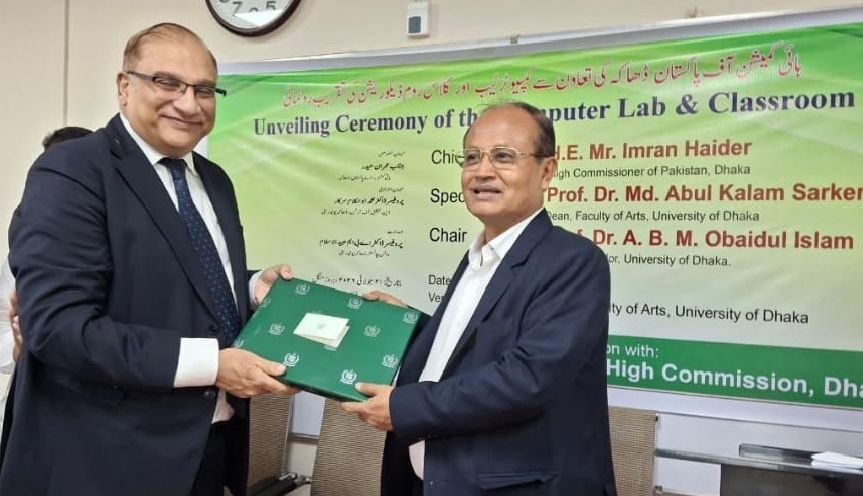
Pakistan High Commissioner, DU Vice Chancellor Discuss Ed...
1
Diplomatic Correspondent: Pakistan High Commissioner to Bang...
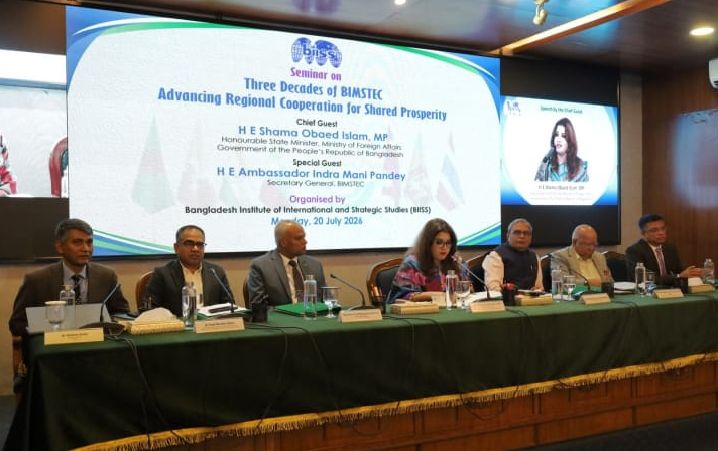
BIISS Hosts Seminar on Three Decades of BIMSTEC, Calls fo...
2
Diplomatic Correspondent: The Bangladesh Institute of Intern...
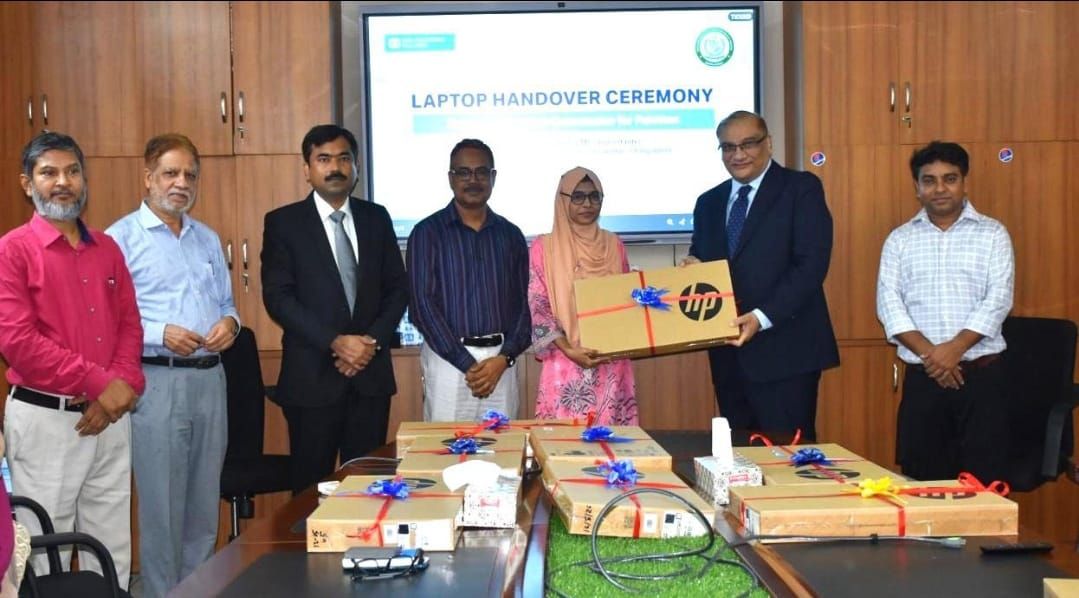
Pakistan High Commissioner Gifts Laptops to SOS Children’...
3
Diplomatic Correspondent: Pakistan High Commissioner to Bang...
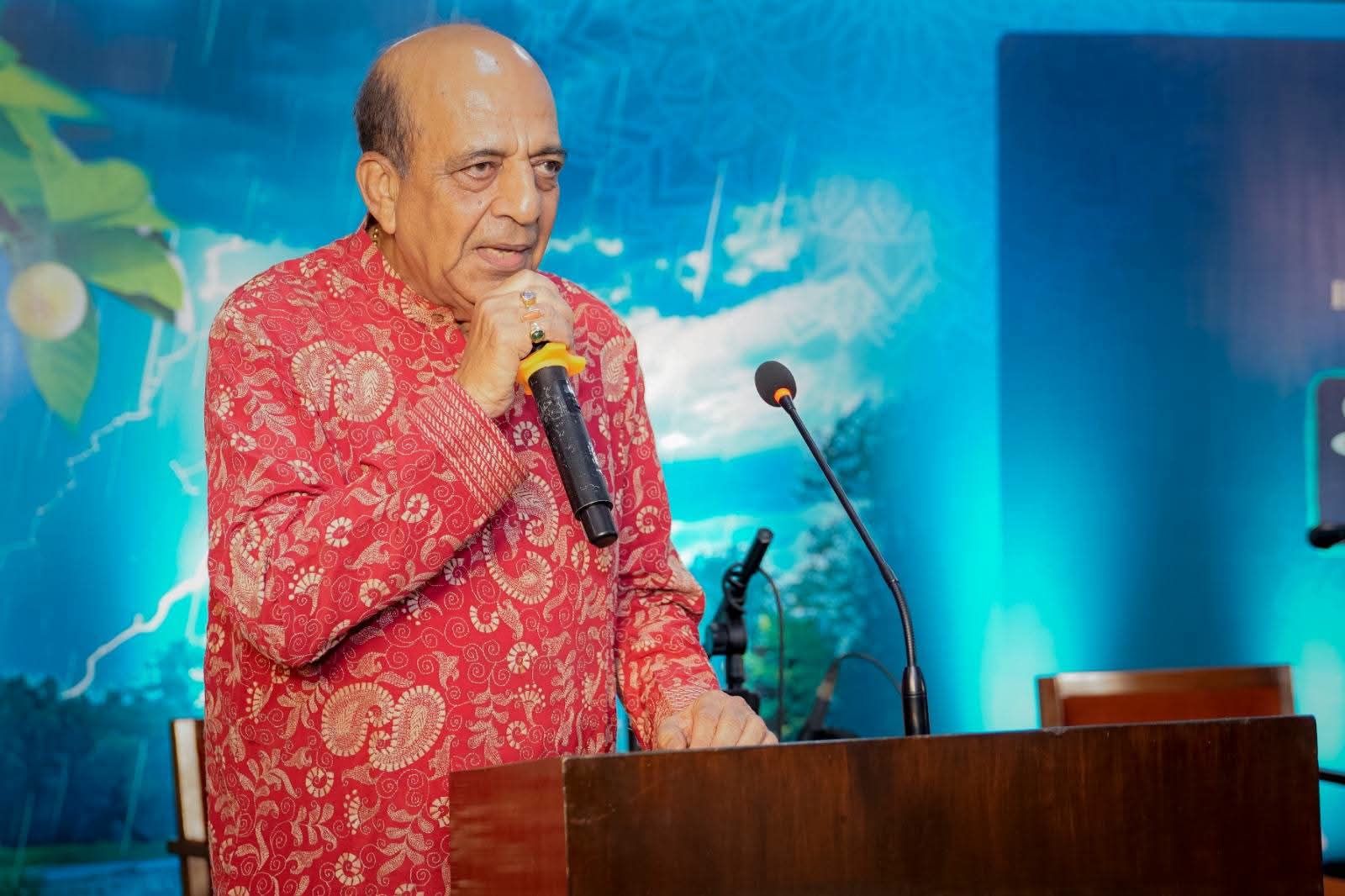
IGCC Hosts ‘Shravan Sandhya’ in Dhaka, Celebrating the Sh...
4
Diplomatic Correspondent: The Indira Gandhi Cultural Centre ...
SAAB Elects New Executive Committee at the Russian House ...
5
Diplomatic Correspondent: The 14th Executive Committee Elect...



মন্তব্য (0)