





- International
Saudi Arabia Brings Good News on Umrah Visa Validity
- International
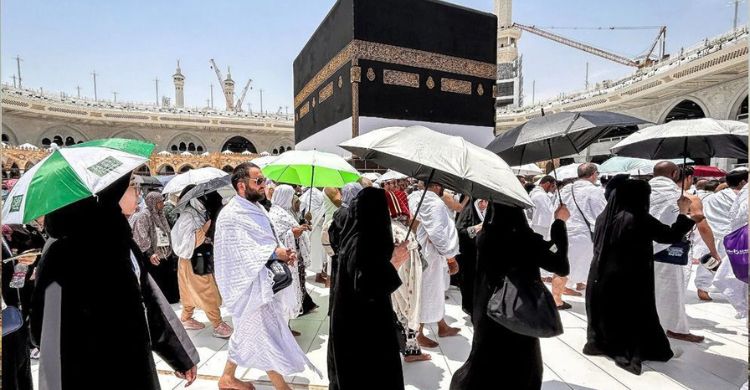
Photo: Collected
Saudi Arabia has extended the validity of its Umrah visa to one year (365 days) as part of efforts to strengthen the Kingdom’s tourism sector. The new visa allows visitors to enter the country multiple times within a year and stay for up to 90 consecutive days on each visit.
The development was reported on Monday by the state-run Saudi Press Agency (SPA).
According to the report, the new visa policy aligns with Crown Prince and Prime Minister Mohammed bin Salman’s Saudi Vision 2030, which aims to expand tourism and diversify the Kingdom’s economy.
However, visa holders will be required to purchase an Umrah package through the Saudi government’s Nusuk online platform before each entry. The duration of the package must not exceed the remaining validity of the visa, and visitors must also obtain an Umrah permit through Nusuk before arriving in the Kingdom.
The visa will remain inactive during the Hajj season, from the 1st of Dhu al-Qi'dah to the 13th of Dhu al-Hijjah on the Islamic calendar. Visa holders will not be able to use the visa during this period.
Meanwhile, Saudi Arabia has also introduced greater flexibility in issuing and renewing residency permits (Iqama) for domestic workers. Employers will now be able to issue or renew permits for a minimum of three months instead of being limited to one- or two-year terms.
The initiative has been launched jointly by the General Directorate of Passports (Jawazat), the Ministry of Human Resources and Social Development, and the national recruitment platform Musaned.
According to the Saudi daily Okaz, employers can now choose residency permit durations of 3, 6, 9, 12, 15, 18, 21, or 24 months. The permits can be issued or renewed digitally through the Absher platform.
Under the new system, employers are no longer required to renew Iqamas for one or two years at a time. Instead, they can pay residency fees based on the duration that best suits their financial and operational needs.
For permits issued in three-month increments or their multiples, the government has also introduced the option of paying the residency fees in quarterly installments, easing the financial burden on employers.
The Hindu Report: How the Youth Movement Has Reshaped Ind...
1
News Desk: The political movement led by India'...
ECOWAS Member States Endorse Nigeria-Morocco African Atla...
2
Staff Correspondent: The Summit of Heads of State and Govern...

Sarnath's Ancient Buddhist Site Inscribed on UNESCO World...
3
Staff Correspondent: India's Ancient Buddhist Site at Sa...
Iran is now giving importance to discussions: Trump
4
News Desk: U.S. President Donald Trump has commented that Iran is now giving ...
UPI transactions surge over 5 years; 12 countries adopt I...
5
The Unified Payments Interface (UPI) has surged over the past five years. Launched by the Nati...



Comment (0)