








- Lead News
- National
Essential Commodity Prices Remain Stable Due to Budget Measures
- লিড নিউজ
- National
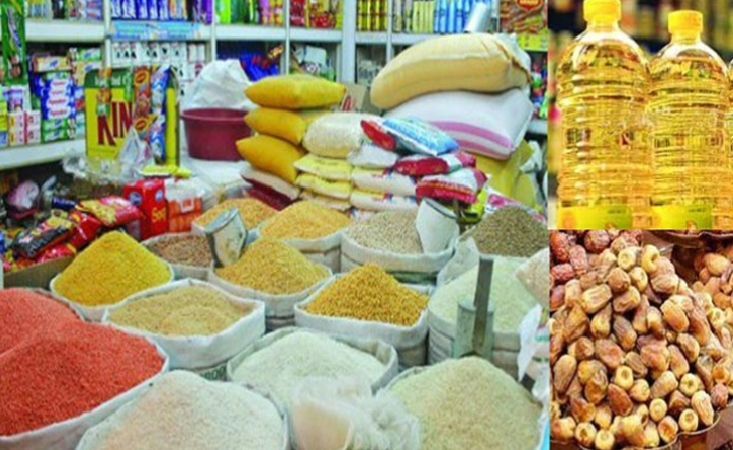
Photo: Collected
News Desk: The initial impact of the duty and tax exemptions announced in Bangladesh's FY 2026–27 national budget has already led to lower retail prices for several essential commodities in the capital, including loose soybean oil, locally produced onions, and broiler chicken.
According to the latest daily market price report by the Trading Corporation of Bangladesh (TCB), prices of several kitchen essentials have either declined or remained stable over the past week, indicating a positive market response to the government's revenue and supply-side measures.
Based on retail market data collected from Sipahibagh, Mirpur-6, Mohammadpur Town Hall, New Market, Rampura, and Mohakhali, the TCB reported that local onions are now selling for Tk 35–45 per kg, while loose soybean oil is priced at Tk 186–192 per litre.
Broiler chicken is currently selling for Tk 160–180 per kg, imported garlic for Tk 120–210 per kg, local ginger for Tk 130–160 per kg, and cucumbers for Tk 50–70 per kg.
However, prices of a few items have increased slightly. Local garlic is now selling for Tk 90–140 per kg, green chilies for Tk 80–140 per kg, and eggplants for Tk 70–100 per kg.
Meanwhile, the prices of most other essential commodities have remained stable. Fine rice (Nazir/Miniket) is selling for Tk 72–85 per kg, medium-grade rice (Paijam/Atash) for Tk 55–68 per kg, and coarse rice for Tk 50–60 per kg.
Small lentils are priced at Tk 150–160 per kg, while larger lentils cost Tk 90–105 per kg. Beef is selling for Tk 780–850 per kg, mutton for Tk 1,200–1,350 per kg, sugar for Tk 105–110 per kg, and iodized salt for Tk 38–42 per kg.
Officials and market analysts said that the budget's decision to remove advance tax on the import of around 60 essential commodities, along with reducing advance tax on several food and agricultural products, has begun lowering import costs and boosting market confidence.
The tax relief covers a wide range of essential goods, including rice, wheat, edible oil, onions, garlic, ginger, sugar, salt, fish, poultry products, potatoes, and seeds. The objective is to ensure an adequate supply of essential goods while helping contain inflation.
The FY 2026–27 budget also provides exemptions from customs duties and VAT on spices, dates, infant food, fertilizers, animal feed, pesticides, and other agricultural inputs to reduce production and distribution costs.
State Minister for Textiles and Jute Md. Shariful Alam recently said that the FY2026–27 national budget has not increased the prices of essential commodities, attributing this to the government's people-friendly fiscal policy.
He said the Tk 938,000 crore budget was designed with public welfare in mind and includes several measures aimed at easing inflationary pressure on ordinary citizens.
Visits to various fresh produce markets across Dhaka found that traders have kept prices of most products stable. According to traders, adequate supply and expectations that the new fiscal incentives will further reduce import costs are helping maintain market stability.
A private-sector employee, Rafiqul Islam, told BSS that stable prices of essential goods have provided some relief to consumers.
"We hope the government will continue monitoring the market so that prices remain within the purchasing power of ordinary people," he said.
Economists stressed that, alongside tax reductions, uninterrupted imports, efficient supply chains, and effective market monitoring are essential to ensure consumers receive the full benefits of the government's fiscal incentives.
They also emphasized the need for regular market oversight to prevent hoarding and artificial shortages.
Professor Md. Rashedur Rahman, Chairman of the Organization Strategy and Leadership (OSL) Department at the University of Dhaka, said that if supply chains remain efficient, the government's tariff and tax rationalization measures will help ease price pressures on essential commodities.
He noted that lower import costs alone will not reduce retail prices unless wholesalers and retailers pass those savings on to consumers.
He added that effective market supervision is crucial to prevent any attempts at price manipulation or creating artificial shortages, while uninterrupted imports and smooth distribution must also be ensured to maintain sufficient market supply.
According to Professor Rahman, if these complementary measures are consistently implemented, the revenue initiatives announced in the FY2026–27 budget will strengthen price stability and improve consumer welfare in the coming months.
Officials said the government will continue closely monitoring the market throughout the fiscal year to ensure that the benefits of lower duties and taxes reach consumers at the retail level and that prices of essential goods remain stable.
Analysts also expressed optimism that if global commodity prices remain relatively stable and domestic supply chains continue operating smoothly, the FY2026–27 budget measures will help control inflation and maintain stable prices. They further stressed the importance of continued coordination among the Ministries of Finance, Commerce, and Food to sustain this positive trend.

Bangladesh Is Moving Toward a Trillion-Dollar Economy: Fi...
1
Finance Minister Amir Khasru Mahmud Chowdhury has said that Bangladesh is on ...

Honouring and Rehabilitating the July Martyrs and Injured...
2
Prime Minister Tarique Rahman has said that ensuring proper recognition and r...

Prime Minister Calls for Expediting the Restart of Loss-M...
3
Prime Minister Tarique Rahman has directed authorities to expedite the proces...

Prime Minister Congratulates Trump on U.S. Independence Day
4
Prime Minister Tarique Rahman has said that the United States
Public Understanding of Governance Depends on the Media: ...
5
News Desk: Information and Broadcasting Minister J...



Comment (0)