

- Lead News
- Diplomatic News
Dhaka-Riyadh relations continue to grow
- লিড নিউজ
- Diplomatic News
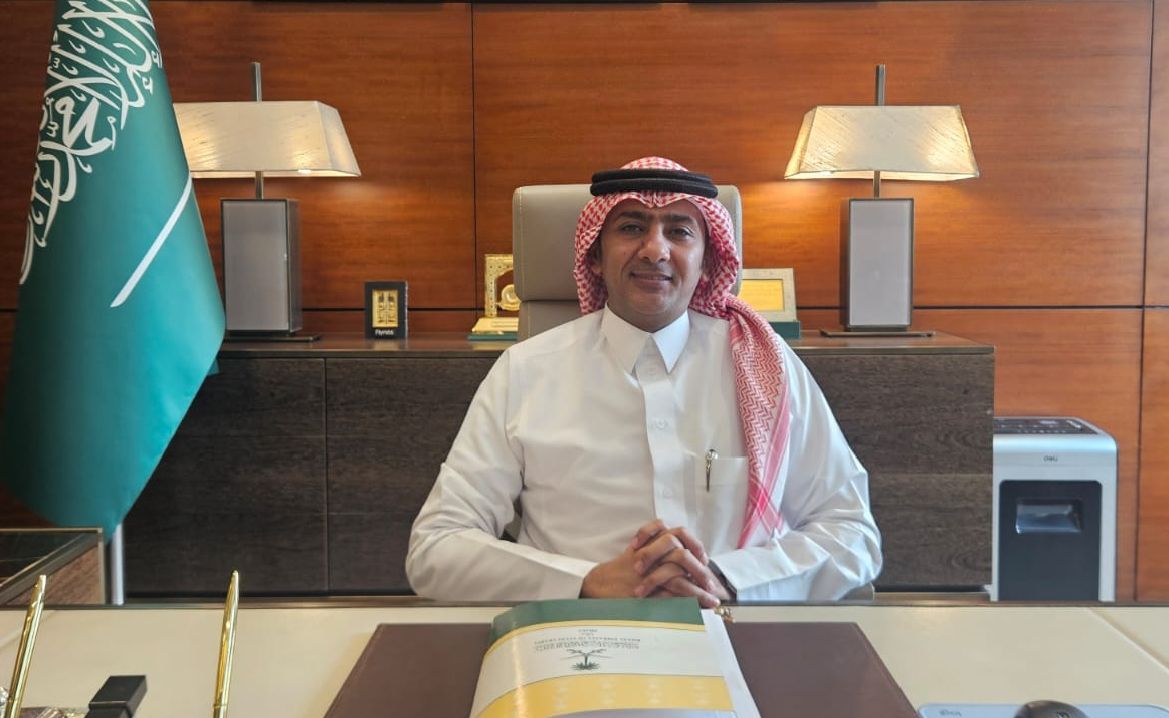
Photo: CNI
Diplomatic Correspondent: Saudi Ambassador to Bangladesh H.E. Dr Abdullah Zafer H. bin Abiyah in an interview with CNI News said that relations between Saudi Arabia and Bangladesh are historic and deeply rooted in strong bonds of friendship, mutual respect, and shared interests. Over the past several years, these relations have continued to expand across a number of areas.
The rest part of the interview is given below:
1. Mr Tarique Rahman is the new Prime Minister of Bangladesh. Former Prime Minister Begum Khaleda Zia visited the KSA at the invitation of the KSA King several times. The Crown Prince of KSA, Mohammed bin Salman Al Saud, has invited the Prime Minister of Bangladesh Mr Tarique Rahman to visit KSA. How do you see Bangladesh –KSA relations in the coming days ?
Answer : Relations between Saudi Arabia and Bangladesh are historic and deeply rooted in strong bonds of friendship, mutual respect, and shared interests. Over the past several years, these relations have continued to expand across a number of areas.
We look forward to seeing a qualitative and comprehensive expansion of bilateral relations in the coming period. Our cooperation should extend beyond the traditional area of manpower to include trade, investment, energy, infrastructure, transport, logistics, technology, and other sectors of mutual interest.
In this context, the invitation extended by His Royal Highness Crown Prince Mohammed bin Salman, Prime Minister of the Kingdom of Saudi Arabia, to Prime Minister Tarique Rahman reflects the importance that the Saudi leadership attaches to relations with Bangladesh. We are confident that high-level visits and regular consultations between the two countries will open new avenues for cooperation and transform our longstanding friendly relations into an even broader and more sustainable strategic partnership.
2. Britain, Australia, Canada and Portugal recognised a Palestinian state after nearly two years of war in Gaza, with France, Belgium and other countries poised to follow suit at the UN General Assembly. The Kingdom of Saudi Arabia (KSA) has reaffirmed the Kingdom's commitment to halt escalations in Gaza through international engagement. How can KSA work with western countries and stakeholders concerned to restore peace in the middle-east ?
Answer: Saudi Arabia has consistently stressed that achieving peace and stability in the Middle East requires addressing the root causes of conflicts, respecting international law and the UN Charter, protecting civilians, and preventing further escalation.
The Kingdom believes in the importance of collective international action involving Arab and Islamic countries, Western countries, and other international stakeholders to promote sustainable political and diplomatic solutions.
With regard to the Palestinian issue, Saudi Arabia continues to affirm its support for the establishment of an independent and sovereign Palestinian state along the 1967 borders, with East Jerusalem as its capital, in accordance with international legitimacy resolutions and the Arab Peace Initiative.
Saudi Arabia views dialogue, diplomacy, and international cooperation as essential tools for reducing tensions and creating the conditions necessary for achieving lasting peace and stability in the Middle East.
3. Over the years, the KSA has been the largest labour market to Bangladeshi workers? However, Bangladeshi workers sometimes experience complications in getting a KSA visa in time. How does KSA and Bangladesh work together in speeding up the visa process and overcoming the hassles of visa seekers?
Answer :Bangladeshi workers are highly valued in Saudi Arabia and have played an important role in the Kingdom’s development. Saudi Arabia remains the largest destination for Bangladeshi workers, with more than 752,000 Bangladeshi workers arriving in the Kingdom in 2025 alone.
Saudi Arabia and Bangladesh are continuously working to improve the recruitment and visa-processing system, enhance verification and documentation procedures, and make the overall process more efficient while safeguarding the rights and interests of both workers and employers.
Our objective is to develop a more efficient, transparent, and digitally enabled system that reduces unnecessary procedures and enables qualified workers to travel to Saudi Arabia through a secure and orderly process.
Cooperation in vocational training, skills development, and preparing workers according to the evolving requirements of the Saudi labour market will also be an important component of our cooperation in the coming period.
With regard to the issuance of visas for Bangladeshi workers, the Saudi Embassy normally issues visas within 24 hours once the application is complete. There are no delays on the Saudi side in this regard. This efficiency reflects the effectiveness of the Kingdom’s digital work systems, governance, and electronic integration among the relevant authorities.
4. Saudi Arabia, Turkey, and Pakistan signed the historic Mecca Joint Defence Agreement on August 7, 2026. The pact establishes a collective security umbrella, declaring that an armed attack against any one of the three member states will be considered an attack against all of them. How do you see this accord?
Answer: The Mecca Joint Defence Agreement signed by Saudi Arabia, Türkiye, and Pakistan on August 7, 2026, reflects the depth of the strategic and defence relations among the three countries.
The agreement provides that an armed attack against any one of the three countries will be considered an attack against all three, while also strengthening defence cooperation among them. It is important to emphasise that the stated objective of the agreement is to strengthen deterrence, collective security, and stability. It is not directed against any particular country. The agreement should therefore be viewed within the broader context of strengthening security cooperation and contributing to regional stability, while maintaining the Kingdom’s strategic relations with its various regional and international partners.
5. Saudi investment company Red Sea Gateway Terminal is engaged in the Patenga Container Terminal and Matarbari Deep Sea Port. What are the latest developments of the projects?
Answer :The involvement of Saudi companies in Bangladesh’s ports, transport, and logistics sectors represents an important development in our bilateral economic relationship. It reflects the evolution of our relations from traditional economic cooperation toward long-term investment partnerships.
The Red Sea Gateway Terminal (RSGT) has made significant investments to develop the terminal and upgrade its infrastructure, equipment, and technology, including the installation of four modern ship-to-shore cranes. These investments aim to increase operational capacity, improve container-handling efficiency, and reduce vessel turnaround time.
The company is also planning to invest approximately USD 1 billion in Bangladesh’s ports and logistics sector, reflecting its strong interest in expanding its investment presence and supporting the development of the country’s logistics infrastructure.
The company has also expressed strong interest in expanding its investment footprint in Bangladesh’s transport and logistics sector, particularly in the maritime sector and major port infrastructure projects such as Matarbari Deep Sea Port.
We view these projects as part of a long-term partnership that can contribute to strengthening Bangladesh’s position as an important regional trade and logistics hub.
6. What is your target to reach bilateral trade between Bangladesh and Saudi Arabia within the next five years?
Answer: We do not look at bilateral trade simply in terms of achieving a single numerical target. Our objective is to achieve sustainable and balanced growth in bilateral trade and to diversify the range of goods and services exchanged between the two countries.
According to available Saudi trade data, Saudi exports to Bangladesh were approximately SAR 5.2 billion, equivalent to around USD 1.39 billion, in 2025, while Saudi imports from Bangladesh were approximately SAR 1.7 billion, equivalent to around USD 453 million.
Over the next five years, we would like to see a significant expansion of opportunities for the private sectors of both countries, including greater Bangladeshi exports to the Saudi market, increased Saudi exports to Bangladesh, and stronger links between trade, investment, industry, and logistics.
We believe there is considerable potential to increase bilateral trade substantially beyond its current level by making better use of the complementary strengths and opportunities available in both countries.
7. The KSA government has been empowering women in different sectors. The participation of Saudi women in KSA in different sectors has been on rise. How do you see the participation of Saudi women in recent times?
Answer: The growing participation of Saudi women is one of the important developments in Saudi Arabia’s economic and social transformation and is an integral part of the objectives of Saudi Vision 2030.
The participation of Saudi women in the labour market has increased significantly in recent years. Women are now increasingly represented across a wide range of sectors, including business, finance, education, healthcare, technology, tourism, entrepreneurship, and leadership positions.
We are witnessing Saudi women making an increasingly visible contribution to the Kingdom’s economic development and to the diversification of the national economy.
This development reflects Saudi Arabia’s commitment to making full use of the country’s human potential and to providing opportunities for women to contribute actively to national development.
8. The Bangladesh government has been working to attract foreign direct investment in the country over the last 10-12 years. Do you see more KSA investment in Bangladesh, particularly in the power and energy sectors? How do you evaluate the investment climate in Bangladesh?
Answer: Yes. We see significant potential for further Saudi investment in Bangladesh, particularly in sectors such as energy, renewable energy, infrastructure, transport and logistics, healthcare, technology, and food security.
Saudi investors are increasingly looking beyond traditional areas of cooperation and exploring opportunities in sectors that can support Bangladesh’s long-term economic development.
At the same time, attracting sustainable, long-term investment requires a stable and predictable investment environment, efficient and transparent procedures, timely government approvals, reliable infrastructure and energy supply, and effective protection for investors.
We welcome the efforts being undertaken by the Government of Bangladesh to improve the investment climate and streamline procedures. Further progress in these areas will help create greater opportunities for Saudi and other international investors.
The potential for stronger Saudi investment is considerable, provided that the opportunities are supported by appropriate regulatory frameworks and a conducive business environment.
9. What is the number of Bangladeshis living in your country? How do your government evaluate their contributions to your country ?
Answer: Saudi Arabia hosts a very large Bangladeshi community, with around four million Bangladeshis working and residing in the Kingdom across a wide range of sectors. Saudi Arabia remains the largest destination for Bangladeshi workers.
For decades, Bangladeshi nationals have contributed to various sectors of the Saudi economy and have become an important part of the people-to-people relationship between our two countries.
The Kingdom values their contributions and remains committed to ensuring that workers operate within the framework of Saudi laws and regulations and that their rights are protected.
At the same time, remittances sent by Bangladeshi workers make an important contribution to Bangladesh’s economy. This demonstrates the mutually beneficial nature of cooperation between our two countries in the field of human resources and employment.
10. Developing countries, including Bangladesh, are becoming victims of climate change. How do KSA and Bangladesh work together on climate change issues? Do you think developed countries should give compensation to developing countries?
Answer : Climate change is a global challenge that requires genuine international cooperation. Developing countries, including Bangladesh, face serious challenges from rising sea levels, floods, cyclones, and other climate-related impacts.
Saudi Arabia and Bangladesh can strengthen cooperation in areas such as renewable energy, green technologies, water management, afforestation, land rehabilitation, and building resilience and adaptive capacity.
Saudi Arabia has placed considerable emphasis on environmental sustainability and climate action through initiatives such as the Saudi Green Initiative and the Middle East Green Initiative.
With regard to climate finance, we believe that developed countries, developing countries, and the international community as a whole have shared responsibilities in supporting countries that are particularly vulnerable to climate change.
This support can include climate finance, concessional financing, technology transfer, capacity building, and other forms of international cooperation, in accordance with relevant international agreements and frameworks.

Singapore at 61: Building on Shared Values and Enduring ...
1
This year, Singapore celebrates 61 years of independence. 2026 also marks the 60th anniversary...

Pakistan HC Clarifies Equal Financial Support for Allama ...
2
Diplomatic Correspondent: The Pakistan High Commission in Dh...
Singapore Keen to Deepen Ties with Bangladesh, Eyes Coope...
3
Diplomatic Correspondent : Singapore remains optimistic abou...
BIMSTEC Marks 12 Years of Secretariat in Dhaka; Secretary...
4
Diplomatic Correspondent: The Bay of Bengal Initiative for M...
Celebrating Kazi Nazrul Islam: An Evening of Culture, Li...
5
Diplomatic Correspondent: The Russian House in Dhaka, in coo...



মন্তব্য (0)