
- Lead News
- Diplomatic News
Singapore Keen to Deepen Ties with Bangladesh, Eyes Cooperation in Logistics, Aviation, Energy and Digital Economy: Mitchel Lee
- লিড নিউজ
- Diplomatic News
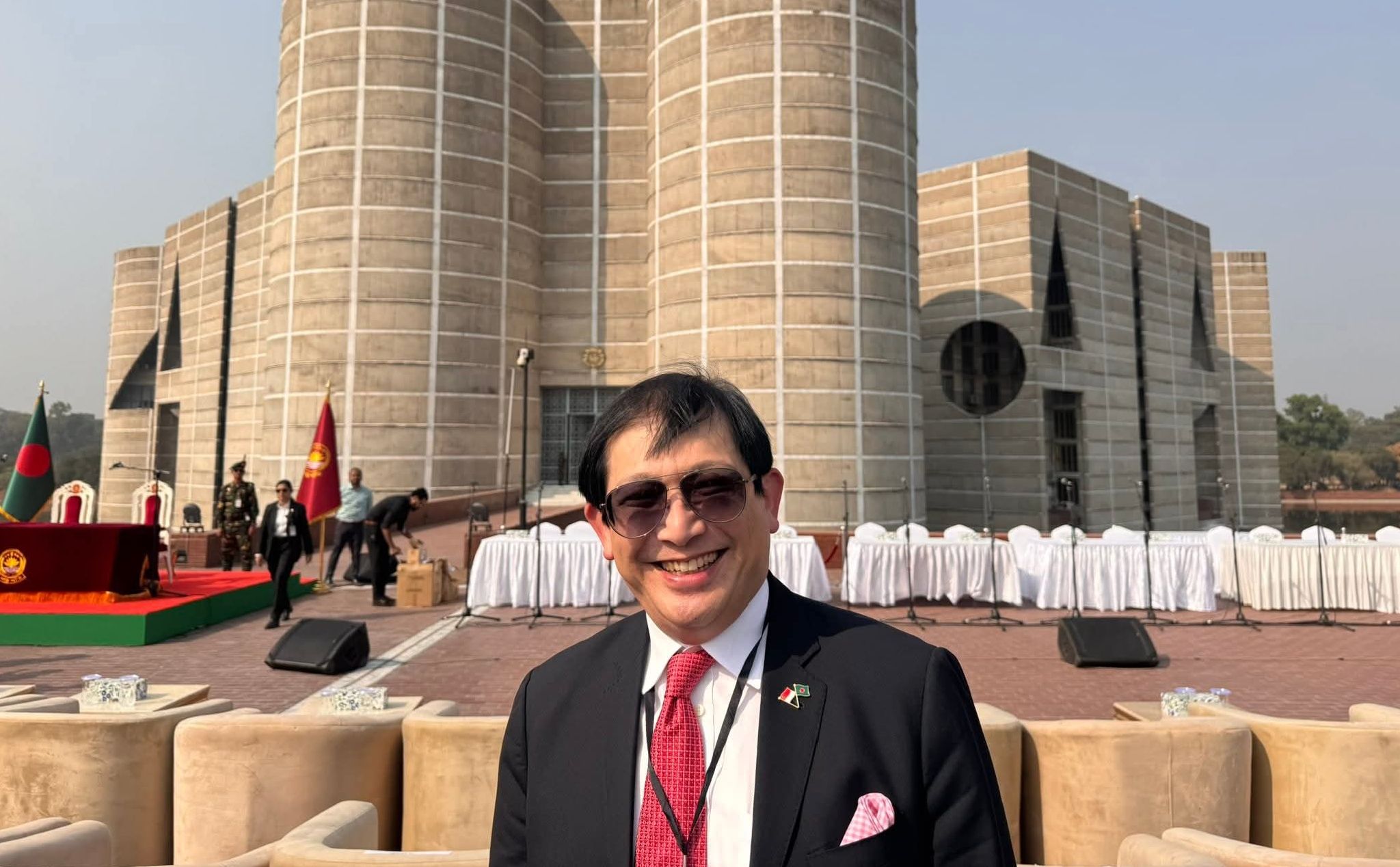
Photo: CNI
Diplomatic Correspondent : Singapore remains optimistic about Bangladesh’s long-term growth prospects and is keen to work with the country’s relatively new government to further deepen bilateral relations, said Mr Mitchel Lee, Charge d’Affaires of the Singapore High Commission in Dhaka.
In an exclusive interview, Lee highlighted significant opportunities for cooperation between Bangladesh and Singapore in logistics, aviation, infrastructure development, energy, the digital economy and capacity-building.
“Singapore remains optimistic about Bangladesh’s long-term growth trajectory,” Lee said, noting that there are “win-win possibilities” for collaboration between the two countries.
He also pointed to the Bay Terminal project in Chattogram as one of the areas with significant potential for bilateral cooperation.
Bangladesh’s Development
Reflecting on Bangladesh’s development over the past 54 years, Lee said the country had made “great strides” in human development and achieved notable progress across a number of human development indicators.
He noted that Bangladesh’s GDP per capita has reached the level of a middle-income country, while stressing that there remains room for further improvement, particularly in women’s empowerment and development, education quality and the living environment.
Energy Challenges
On Bangladesh’s ongoing energy challenges, Lee said the immediate situation would remain challenging as the country relies on overseas LNG supplies for electricity generation while international prices are expected to remain high.
He also noted that domestic gas production is declining and that expanding onshore or offshore production would take time.
Lee said the government should move quickly to implement the Prime Minister’s five-point plan while encouraging the public to conserve electricity. He also highlighted Singapore’s experience of using electricity pricing as an important mechanism to encourage consumers to make more efficient choices.
Bilateral Trade and FTA
According to Lee, bilateral trade between Bangladesh and Singapore stood at S$3.9 billion in 2025, equivalent to around US$3 billion.
While he said it was difficult to predict the exact direction of trade over the next five years, Lee expressed optimism that trade could increase if the two countries conclude a Free Trade Agreement (FTA).
He said the two sides have already held two rounds of negotiations since the FTA was first proposed in November 2022.
“The third round of discussions will take place in October 2026,” Lee said, adding that Singapore hopes negotiations can proceed at a quicker pace.
He said an FTA would bring substantial benefits to both sides and help Bangladesh prepare more effectively for its graduation from the Least Developed Country (LDC) category.
Business Environment
Discussing the investment climate, Lee said Singaporean companies are increasingly looking at opportunities in emerging markets but also want a predictable business environment.
He said Bangladesh’s political transition over the past several years had created challenges for the business environment.
“If predictability and stability can be sustained, we can expect Singapore companies to pay more attention to Bangladesh,” he said.
Lee also suggested that Bangladesh should benchmark its business environment and conditions against countries that are considered its competitors.
Healthcare Cooperation
Lee said there has been interest among Bangladeshi businessmen in collaborating with Singapore healthcare providers, although Singapore’s privately run hospitals have so far not ventured into Bangladesh.
He said Bangladesh would need to do more to promote investment in the healthcare sector, including by improving the business environment.
At the public-sector level, Singapore General Hospital signed an MOU with Bangladesh’s National Institute of Burn and Plastic Surgery in 2016, which was renewed in 2024. The cooperation focuses on capacity-building in burn care management and specialised clinical training.
Lee also noted that several Singaporean medical teams had travelled to Bangladesh during his tenure in Dhaka to conduct emergency medical missions and elective surgeries.
Water Management
On Bangladesh’s water management challenges, Lee said Singapore considers water an existential issue and has invested extensively in water recycling, rainwater runoff management and drainage systems.
Singapore, he said, is willing to share its experience with Bangladesh.
He invited Bangladesh to participate in the Singapore International Water Week, which was last held in June 2026, and encouraged greater engagement with international solution providers and experts in water management.
Lee said water scarcity should not necessarily be a major issue for Bangladesh if adequate resources are invested in irrigation, drainage and storage facilities. He suggested that such initiatives could initially be introduced through small-scale pilot projects and subsequently replicated elsewhere.
Bangladeshi Workers in Singapore
Lee said Singapore values its migrant worker community, including several thousand Bangladeshi workers employed mainly in the marine and construction sectors.
“They have helped to build up our physical infrastructure and built environment,” he said, adding that Bangladeshi workers enjoy good working conditions in Singapore.
Despite Singapore’s relatively small size and migrant worker population compared with some other countries, Lee noted that Singapore ranked ninth among countries in terms of remittances sent to Bangladesh, with approximately US$136 million remitted in the previous year.
Milestones in Bilateral Relations
Bangladesh and Singapore are marking 54 years of diplomatic relations this year.
Lee highlighted several milestones, including the Air Services Agreement signed in 1979, the Double Taxation Avoidance Agreement signed in 1980, the Bilateral Investment Treaty concluded in 2004, and the 2018 MOU on cooperation in public-private partnerships, which was renewed in January 2026.
In November 2022, the two countries also signed an MOU on Trade and Investment, establishing a Joint Working Group to work on bilateral investment projects and a possible FTA.
Bay Terminal Project
Regarding the proposed Bay Terminal development in Chattogram, Lee said PSA International and the Chittagong Port Authority have been discussing the project for some time.
A modelling study or survey is currently being carried out to determine technical parameters, he said.
“We hope that the project will be awarded in the not too distant future,” Lee said, adding that construction could begin soon after the award and may take around three years to complete.
Rohingya Crisis
On the Rohingya crisis, Lee said Singapore understands Bangladesh’s position that Rohingya refugees should return to Myanmar safely, voluntarily and with dignity.
However, he said conducive conditions for such repatriation do not currently exist in Myanmar or Rakhine State, and he did not foresee such conditions emerging in the immediate future.
Lee also noted that there had been no progress on the ASEAN Five-Point Consensus, which Myanmar’s military authorities agreed to more than four years ago.
He said Singapore would continue supporting ASEAN’s efforts through the ASEAN Coordinating Centre for Humanitarian Assistance on Disaster Management (AHA Centre), with a focus on diplomacy and efforts to encourage Myanmar authorities to implement the Five-Point Consensus.
Carbon Credits
Lee revealed that Singapore has recently proposed a draft MOU with Bangladesh on carbon-credit collaboration and is awaiting feedback from the Bangladeshi government.
Singapore has signed 11 Implementation Agreements on carbon-credit cooperation with partners across Africa, Latin America and Asia, he said.
Lee expressed hope that Bangladesh and Singapore could move from the proposed MOU to an Implementation Agreement, saying that high-quality carbon-credit projects could attract investment, benefit local communities and contribute to the countries’ respective climate commitments under Article 6 of the Paris Agreement.
Looking Ahead
Lee said Singapore sees considerable potential for expanding cooperation with Bangladesh across multiple sectors.
With trade negotiations expected to continue in October and discussions progressing on areas including the Bay Terminal, carbon credits, healthcare, infrastructure and the digital economy, both countries are looking to build on more than five decades of bilateral relations and expand practical cooperation in the years ahead.
Dhaka-Riyadh relations continue to grow
1
Diplomatic Correspondent: Saudi Ambassador to Bangladesh&nbs...
Singapore at 61: Building on Shared Values and Enduring ...
2
This year, Singapore celebrates 61 years of independence. 2026 also marks the 60th anniversary...

Pakistan HC Clarifies Equal Financial Support for Allama ...
3
Diplomatic Correspondent: The Pakistan High Commission in Dh...
BIMSTEC Marks 12 Years of Secretariat in Dhaka; Secretary...
4
Diplomatic Correspondent: The Bay of Bengal Initiative for M...
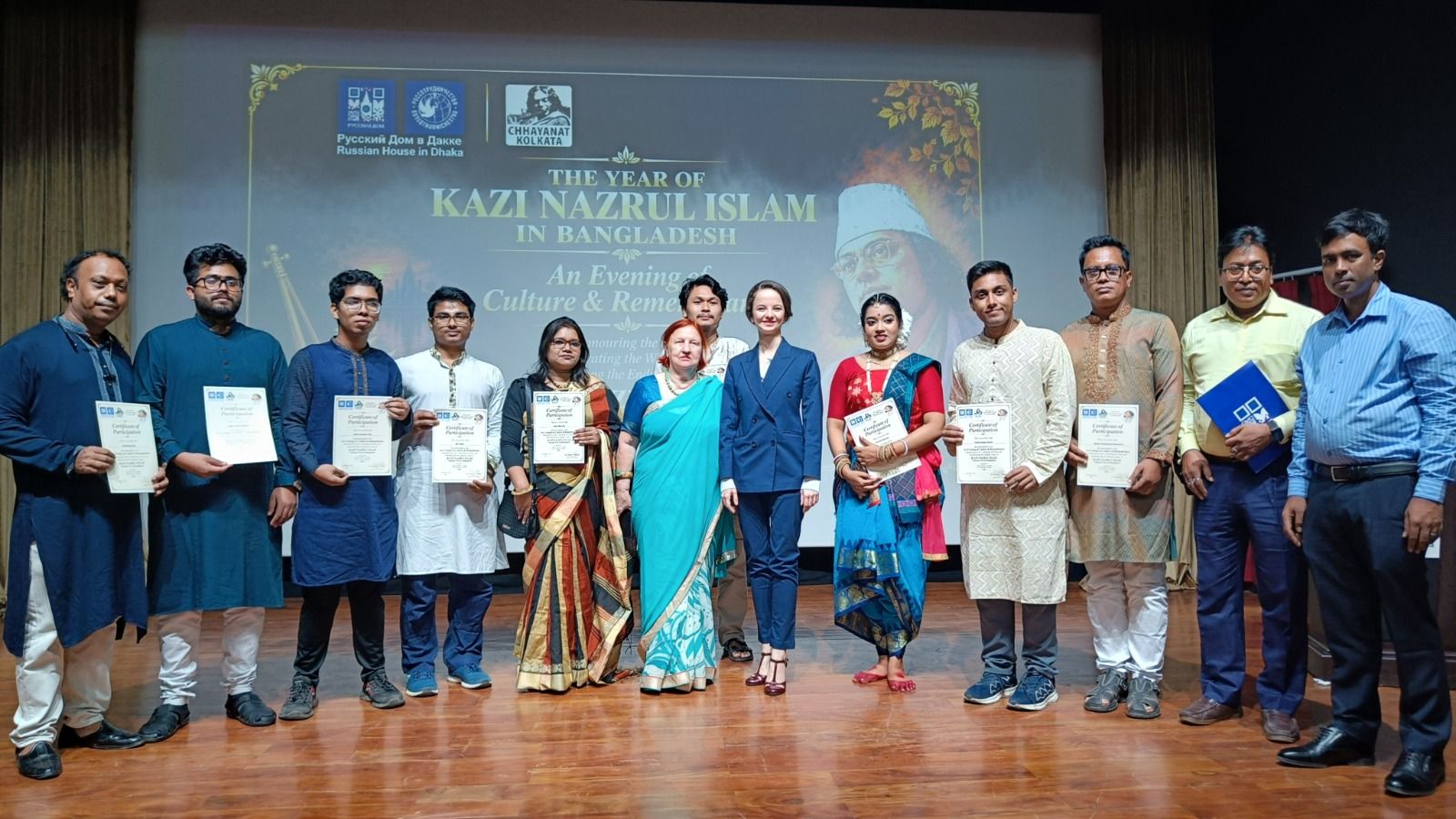
Celebrating Kazi Nazrul Islam: An Evening of Culture, Li...
5
Diplomatic Correspondent: The Russian House in Dhaka, in coo...



মন্তব্য (0)