







- Lead News
- International
Sikkim Faces the Risk of a Disaster Worse Than Nepal’s!
- লিড নিউজ
- International
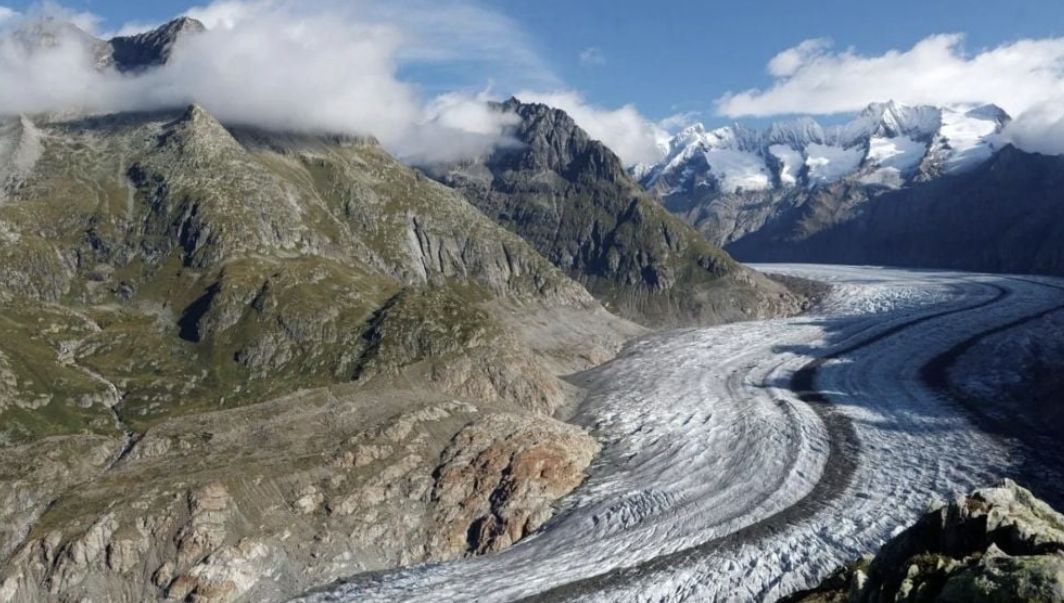
Photo: Collected
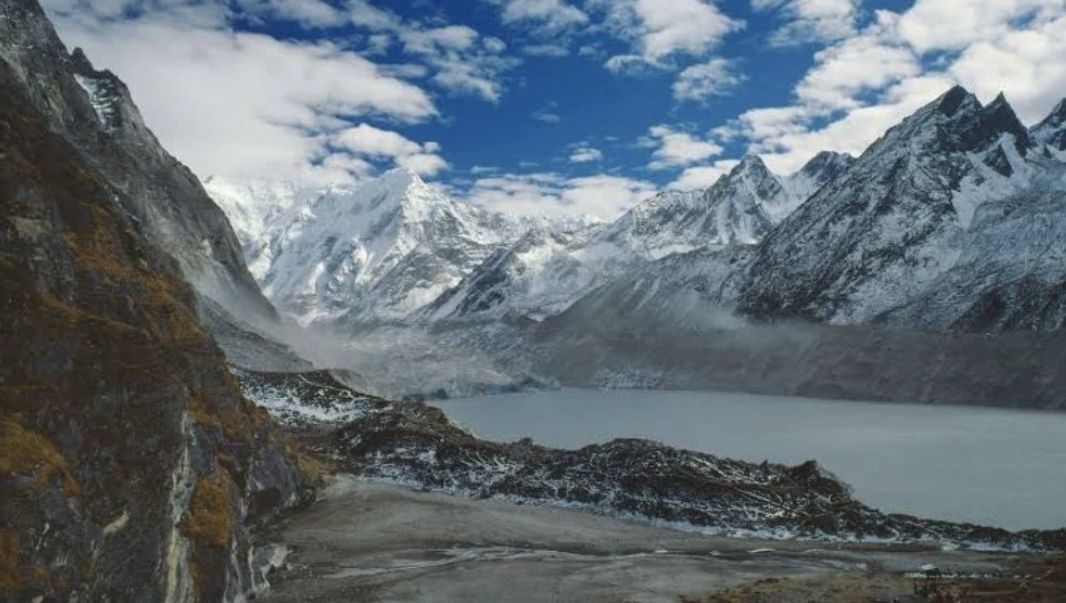
News Desk: New clouds of natural disaster are gathering over the mountainous Indian state of Sikkim. By monitoring glacial lakes through satellites and modern technology, scientists have found that 40 glacial lakes in the region are in a highly vulnerable condition.
Among them, 16 lakes are considered so dangerous that even a minor disturbance could trigger a major outburst.
In simple terms, large lakes or reservoirs form high in the mountains as glaciers melt under rising temperatures. However, as global temperatures increase, glaciers are melting faster than before. As a result, water pressure inside these lakes is steadily increasing.
At any moment, landslides, earthquakes, or excessive water pressure could cause the natural dams holding these lakes back to collapse. If that happens, powerful torrents and flash floods could rush down the mountains within moments, sweeping away everything in their path.
The main reason for concern is Sikkim’s past experience. In October 2023, a glacial lake outburst triggered a massive flood that swept downstream. At least 60 people were killed, and a major dam was completely destroyed. A similar disaster recently occurred near the Nepal border, serving as another warning for the entire Himalayan region.
To address the situation, the state government is already taking preventive measures. A special plan has been prepared to drain excess water from the most dangerous lake, Shako Cho. Authorities are also planning to use specialized technology to control water levels in the Lonak and Gurudongmar lakes.
Scientists are working on ways to safely release the enormous volume of water accumulated in the mountains. They are considering methods such as installing large pipes and pumping out the water, using siphon systems, or constructing tunnels to divert the water through alternative routes. At the same time, new types of sensors and sirens are being installed in the mountains so that people living in low-lying areas can be evacuated to safer locations before any disaster occurs.
Source: The Hindu

Nine Soldiers Killed, 19 Swept Away in the Caspian Sea
1
News Desk:
Ni...

Khalilur Rahman calls for restoring trust in the UN and r...
2
International Desk: In his opening address at the 81st Session of the UN Gene...
Depression over Bay of Bengal moves towards Indian coast
3
A large cluster of clouds has suddenly formed over the Bay of Bengal and is gradually intensif...

US Announces Sweeping Measures Targeting All Iranian Airl...
4
News Desk: The United States has unveiled a strict new plan aimed at effectively grounding Ira...
Dire Warnings for 8 Countries, Including Bangladesh
5
News Desk: The sudden avalanche and devastating fl...



Comment (0)