- Lead News
- Politics
Rizvi: Many are attempting to justify Hasina on talk shows
- লিড নিউজ
- Politics
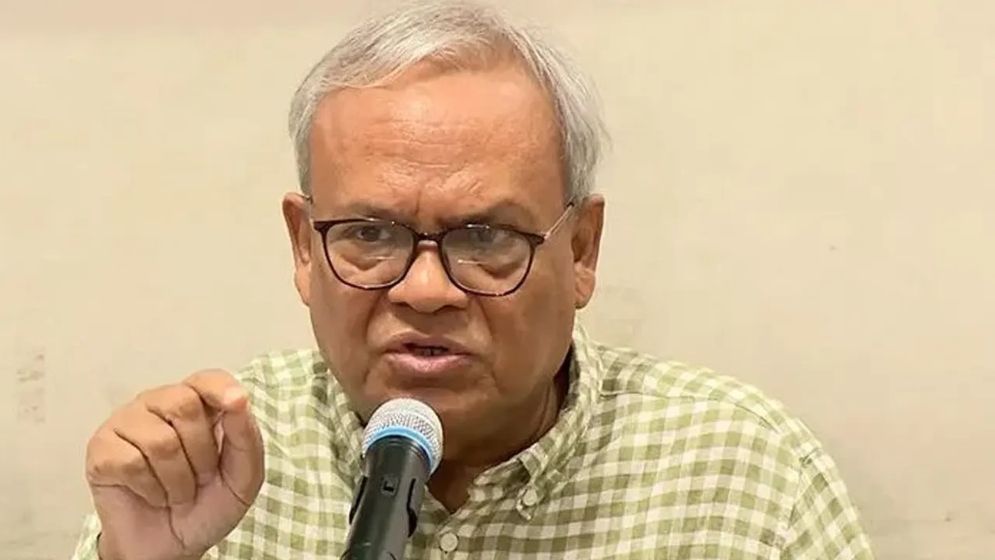
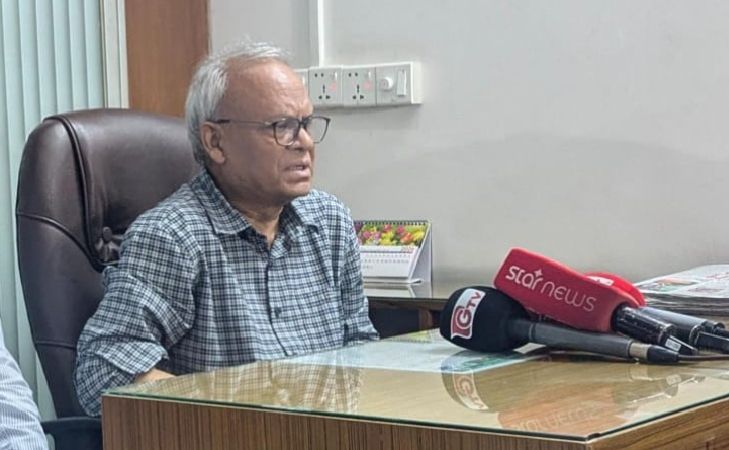
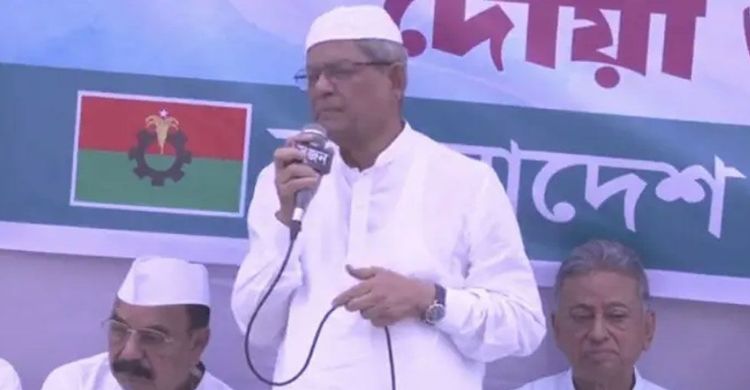
Photo: Collected
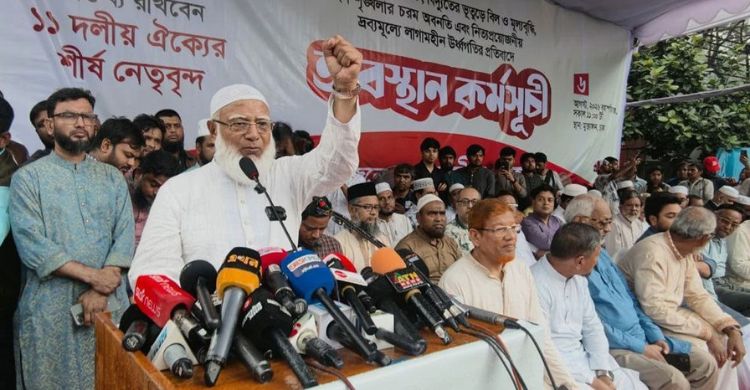
News Desk: BNP Senior Joint Secretary General Ruhul Kabir Rizvi has alleged that many people are trying, directly and indirectly, to defend former Prime Minister Sheikh Hasina on television talk shows.
Speaking at a discussion marking "Jatrabari Resistance Day" in Dhaka's Jatrabari area on Friday (July 17), Rizvi said that Hasina had "shed the blood of the people of this country" and claimed that her father had done the same. He argued that if Sheikh Hasina were allowed to return to politics, then figures such as Yahya Khan and Tikka Khan would also have to be viewed differently, questioning how Hasina's actions were any less severe than theirs.
Rizvi further alleged that many television hosts and presenters are attempting to make Sheikh Hasina politically relevant again through talk shows. According to him, individuals who had remained absent after August 5 are gradually returning to the media and trying to praise her.
Questioning Hasina's departure from the country, Rizvi said, "If Sheikh Hasina was so courageous, why did she flee? Begum Khaleda Zia never fled." He also alleged that the treatment of opposition leaders in prison reflected the extent of Hasina's alleged authoritarianism. He claimed that "a fascist party cannot be brought back," drawing a comparison with Adolf Hitler's political movement.
Referring to the Jatrabari and Rayerbagh resistance during the July Movement, Rizvi described them as historic events that would remain memorable. He claimed that as heavy gunfire echoed through Jatrabari, activists from the BNP, Jatiyatabadi Chhatra Dal, Jamaat-e-Islami, Islami Chhatra Shibir, madrasa students, and members of other organizations stood together in resistance.
Rizvi also paid tribute to Abu Sayeed, saying his sacrifice acted as a catalyst that intensified the movement. In an apparent reference to Jamaat-e-Islami, he criticized the party for, in his words, repeatedly attempting to gain political advantage during periods of instability. He questioned the party's ideological position, noting that while the country had supported independence, Jamaat had opposed it. He further alleged that despite incidents of border killings and alleged push-ins, Jamaat had advocated rebuilding relations with India after August 5. He argued that if Jamaat adopted what he described as the same tone as the Awami League and Sheikh Hasina, the public would not accept it.
Rizvi said that the nationwide movement spread rapidly after the death of Abu Sayeed in Rangpur on July 16, with many people later being killed in shootings in areas including Jatrabari, Shanir Akhra, and Rayerbagh.
Recalling events on July 19, 2024, he said the BNP had organized a rally in front of the National Press Club, but transportation had effectively been shut down. He alleged that after overcoming numerous obstacles to reach the venue, police dispersed the gathering using sound grenades, gunfire, and baton charges. He added that he was later arrested and sent to prison by court order.
According to Rizvi, while in prison he learned about the spread of the movement across the country. He also alleged that several BNP leaders were subjected to torture during that period.
Referring again to Sheikh Hasina, Rizvi questioned how, in his view, someone responsible for the deaths of children, teenagers, and young people could ever be forgiven. He maintained that, following the bloodshed, the Awami League should not be allowed to return to politics.
Rizvi also said that while the government should be criticized where necessary, its positive initiatives should likewise be acknowledged. He concluded by remembering those killed during the July Movement in Jatrabari, Shanir Akhra, Rayerbagh, and other parts of the country, and prayed for the peace of their souls.
Among those present at the event were Abdus Salam, Administrator of the Dhaka South City Corporation and an adviser to the BNP Chairperson, and Nurul Haque Nur, State Minister for Expatriates' Welfare, among others.
Oli Ahmed Explains Why He Fell Out with B. Chowdhury
1
Colonel (retd) Oli Ahmed and Professor Dr A.Q.M. Badruddoza Chowdhury were both prominent figu...
Khaleda Zia the Main Architect of BNP’s Popularity: Mirza...
2
BNP presidential candidate Mirza Fakhrul Islam Alamgir has described former prime minister and...

Four Leaders Appointed to BNP Standing Committee
3
Four leaders have been newly included as members of the Bangladesh Nationalist Party (BNP) Nat...

Four Leaders Appointed to BNP Standing Committee
4
Four leaders have been newly included as members of the Bangladesh Nationalist Party (BNP) Nat...
Indian media reports Prime Minister may visit Delhi as ea...
5



মন্তব্য (0)