- National
Dhaka’s primary negotiating objectives at COP31
- National
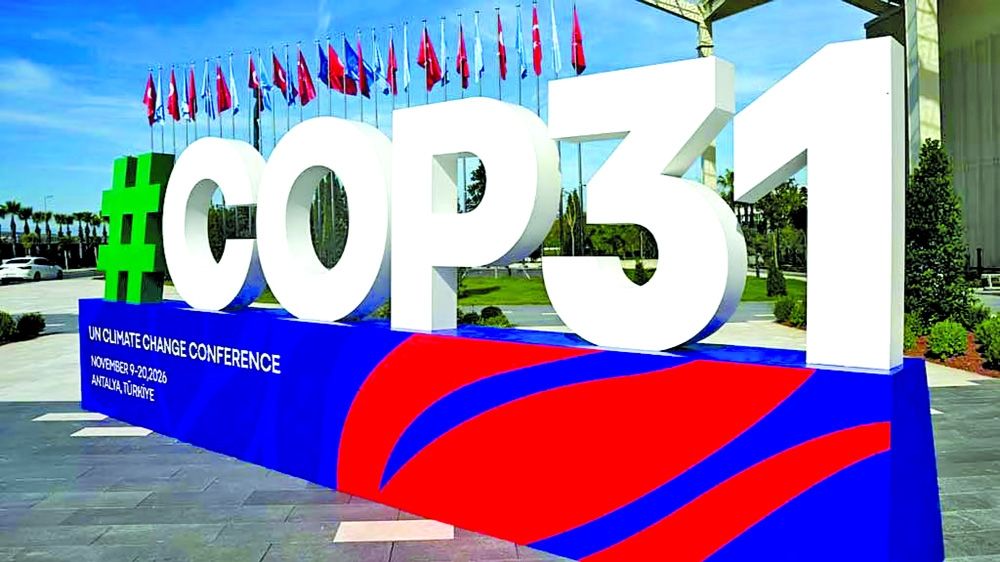
Photo: Collected
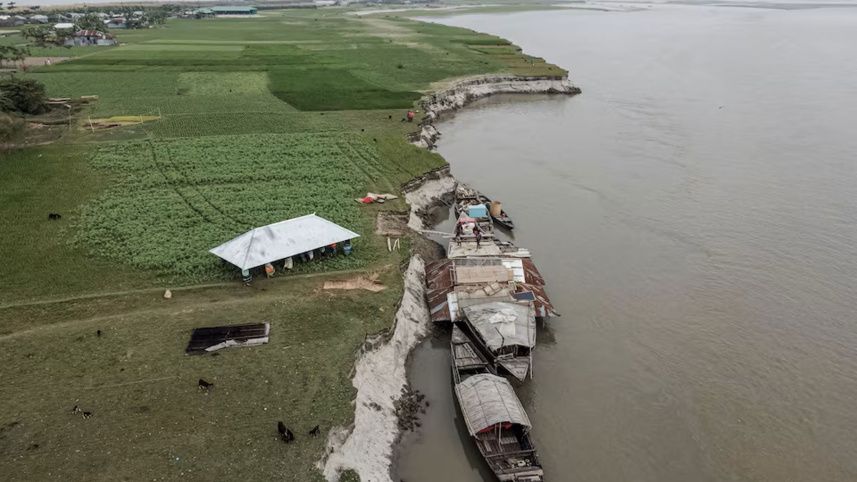
News Desk: Each year, global leaders convene at the UN climate conference to decide how to tackle a rapidly warming planet, resulting in new pledges, agreements, and targets. Yet for nations on the climate frontlines, the true measure of success lies in whether the promised funding, technology, and assistance actually reach the vulnerable communities on the ground.
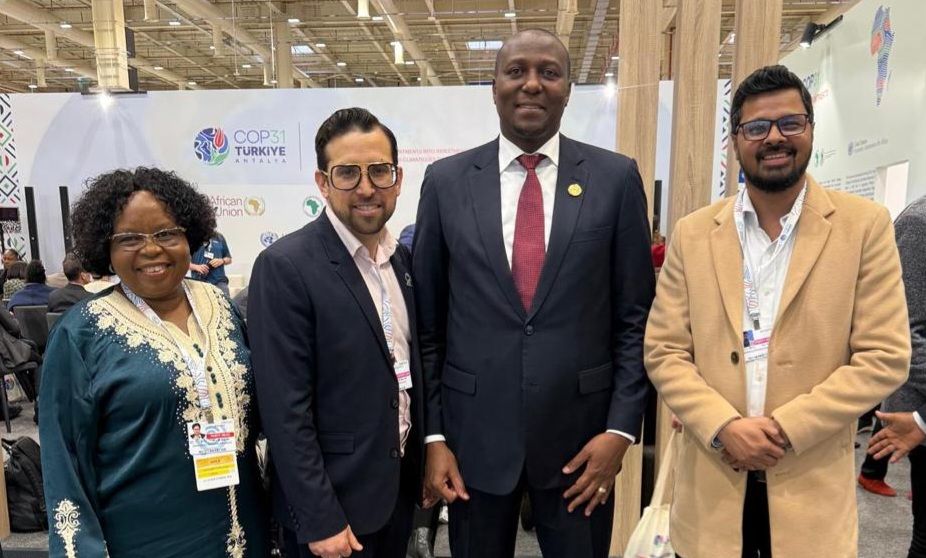
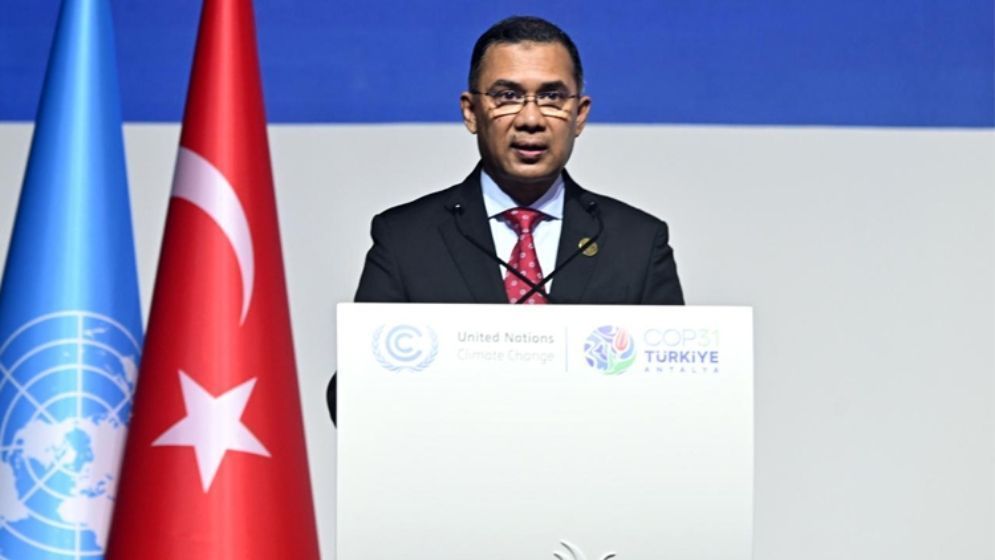
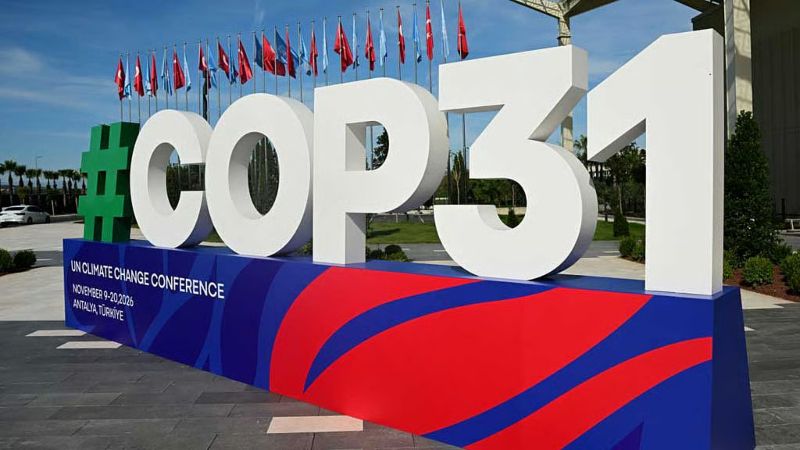
This disconnect between promises and practical execution defines Bangladesh’s strategy for COP31, kicking off in Antalya, Turkey, on November 9. According to a bdnews24 report, Dhaka is entering the summit with demands to triple adaptation financing, alongside securing technology transfers, robust loss and damage support, and resilience-building resources.
Prime Minister Tarique Rahman will attend the high-level segments, joined by the environment minister and state minister, senior bureaucrats, civil society members, and NGO representatives. Australia is set to preside over this year’s negotiations.
Environment Minister Abdul Awal Mintoo emphasized that safeguarding at-risk populations and achieving climate justice remain at the heart of Dhaka’s agenda. "Bangladesh is prioritising the protection of climate-vulnerable communities, climate justice, and securing the funding and technological support required to execute our national adaptation plans," he stated.
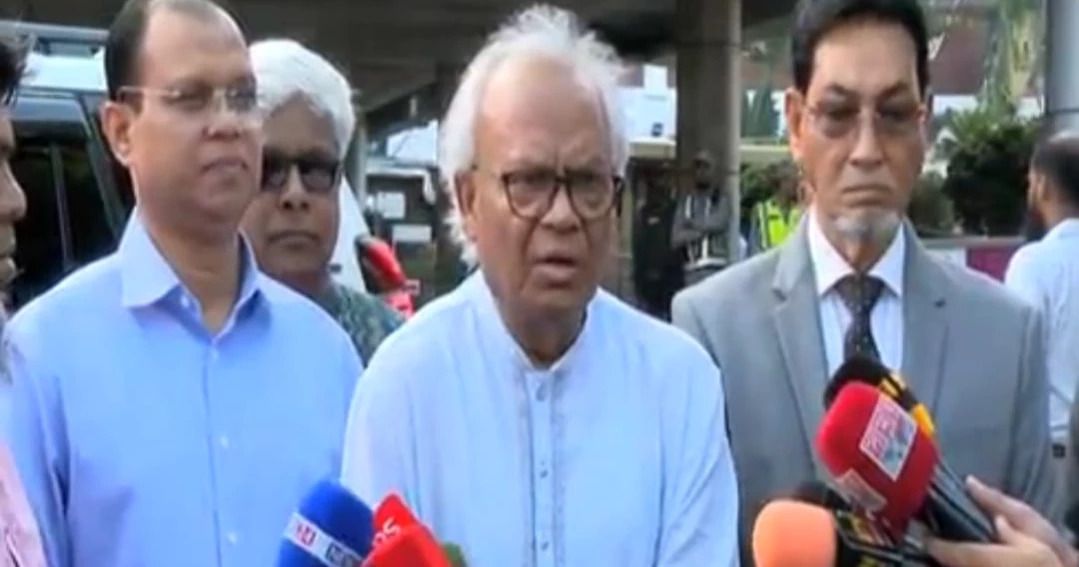
Renowned climate scientist Atiq Rahman noted that Bangladesh will continue championing Least Developed Country (LDC) interests even after transitioning out of the category. All participating nations are signatories to the UN Framework Convention on Climate Change (UNFCCC). "Bangladesh was previously at the forefront of the least developed countries bloc," he explained, adding that despite graduating to developing-nation status, the country remains a vital advocate and coordinator for LDC issues, where real breakthroughs happen during implementation rather than plenary speeches.
A Summit Measured by Delivery
Following the creation of the IPCC in 1990 and a global climate framework in 1992, annual COP summits began in 1995. Climate specialist Prof. Ainun Nishat stressed that COP31 will be judged strictly on execution. He pointed out that while political declarations are routinely achieved, actual delivery lags behind, calling for independent monitoring to ensure funds reach the grassroots level. Warning that global temperatures could surpass 2°C above pre-industrial levels by 2050—evidenced by recent devastating cyclones in India, the US, and China—he urged integrating climate resilience into all development budgets rather than relying on on-paper preparedness.
Following two days of LDC preparatory talks, Department of Environment Director Mirza Shawkat Ali confirmed that technical consultations are underway, heavily focused on climate finance, technology transfer, loss and damage execution, and adaptation frameworks. Dhaka aims to triple adaptation funding, expand the Loss and Damage Fund, uphold the 1.5°C warming cap, and secure clear metrics and financing for the Global Goal on Adaptation (GGA) ahead of the 2028 Global Stocktake (GST).
Established under Article 7 of the 2015 Paris Agreement, the GGA places adaptation on equal footing with emissions cuts. Shawkat Ali noted that limiting warming to 1.5°C benefits the entire world, including Bangladesh, which already boasts a strong pipeline of approved climate projects in South Asia and allocates roughly $4.2 billion annually from its own Annual Development Programme (ADP) toward climate initiatives.
Distance between Pledges and Payments
Last year’s COP30 in Belem, Brazil, failed to deliver substantial financial commitments for Bangladesh, largely due to fossil-fuel-producing nations blocking binding phase-out timelines. Addressing this gap on October 24, State Minister for Foreign Affairs Shama Obaed Islam called for simplifying access to the Green Climate Fund, making the Loss and Damage Fund operational on the ground, and removing bureaucratic hurdles to facilitate technology transfers for agriculture and water security.
Mintoo reiterated that climate aid must come as grants rather than loans to avoid worsening sovereign debt. Highlighting that climate impacts cost Bangladesh around $15.2 billion annually, he noted that streamlined approval processes are essential for direct fund disbursement, though actual compensation is negotiated collectively through blocs rather than bilaterally.
Prof. Ainun Nishat also observed that Bangladesh’s global vulnerability ranking has improved from first place two decades ago to roughly 47th today. Explaining the summit's structure, he contrasted the Blue Zone—where state leaders and diplomats negotiate binding Paris Agreement policies—with the Green Zone, where civil society groups hold demonstrations that rarely influence formal negotiations. He added that bilateral talks would be key to building diplomatic leverage.
Finance Targets and Structural Deadlocks
Bangladesh, one of 27 LDCs to submit a National Adaptation Plan (NAP) in 2022, has started funding its rollout domestically, though Shawkat Ali stressed that international capital remains indispensable. Following the COP29 decision in Baku setting a $300 billion annual New Collective Quantified Goal (NCQG) by 2035, Dhaka is demanding a tripled allocation specifically earmarked for resilience.
Meanwhile, BUET’s Prof. AKM Saiful Islam identified the US withdrawal from the Paris Agreement, ongoing global conflicts, and pushback from oil-rich states as major roadblocks to financing and emissions reductions. He outlined five core priorities: national and coastal adaptation plans; loss and damage grants and technology; meeting the $300 billion annual and $1.3 trillion long-term finance goals; a just transition featuring alternative livelihoods and social safety nets; and carbon credits alongside the 1.5°C target and GGA.
Taking Bangladesh's Case to Antalya
Special Assistant to the Prime Minister Saimum Parvez noted that Dhaka’s official position was shaped through inter-ministerial reviews and expert consultations, with Bangladesh coordinating closely with the LDC bloc, G77, and the Climate Vulnerable Forum. "Bangladesh's primary objective at COP31 is securing concrete, trackable progress on implementation support to protect lives and livelihoods," he stated.
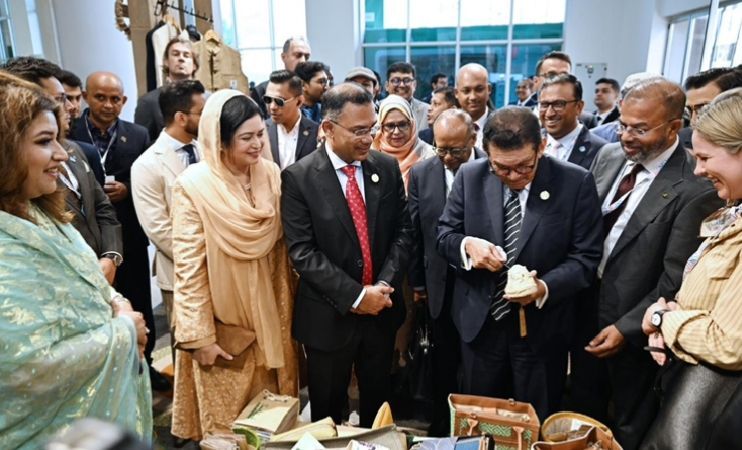
To reinforce its message, Bangladesh will host a 100-square-metre pavilion in Antalya showcasing its climate vulnerabilities, adaptation milestones, NDC 3.0, carbon strategies, and eco-friendly jute alternatives alongside policy forums.
Law Minister: Sheikh Hasina Will Return to Bangladesh Thr...
1
News Desk: Law Minister Asaduzzaman has said that Sheikh Hasina will return t...
Food Minister: Tk 30 per Kg Rice Sales Programmed for Gar...
2
News Desk: Food Minister Afrozha Khanam Rita has said that the programme to s...
Local Government Left Out of Urban Planning
3
News Desk: Experts have expressed concern that local government institutions ...
Echoes of Freedom, Bonds of Friendship: A Musical Celebra...
4
Staff Correspondent: The Russian House in Dhaka, in cooperat...
Dhaka Forum Holds Strategic Meeting with the Prime Minis...
5
News Desk: Antalya, November 13, 2026 – On the sideli...



Comment (0)