





- আন্তর্জাতিক
Excluding India, Pakistan wants to form an alliance with Bangladesh and China
- আন্তর্জাতিক
ছবিঃ সংগৃহীত
News Desk:
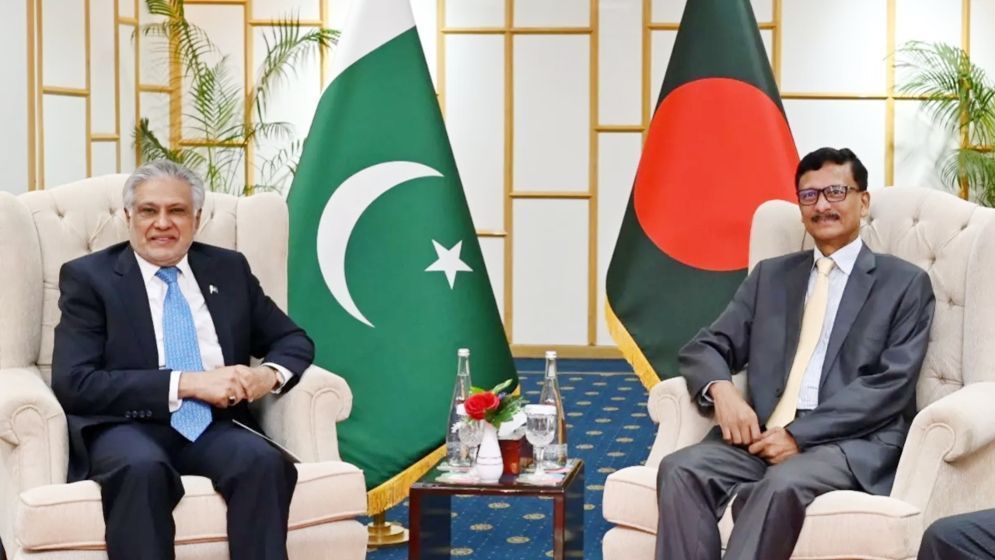
Pakistan’s Deputy Prime Minister Ishaq Dar has indicated that the scope of the recently proposed trilateral alliance involving Bangladesh, Pakistan, and China could potentially be expanded to include countries outside the region.
Speaking at the Islamabad Conclave Forum on Wednesday (3 December), Dar stated, “We are against benefiting ourselves at the expense of others. We have always emphasized cooperation over conflict.”
The statement suggests that Pakistan is considering establishing an alternative regional framework to SAARC through this new alliance, as the South Asian Association for Regional Cooperation (SAARC) has been largely inactive due to longstanding India–Pakistan tensions. In June, diplomats from China, Pakistan, and Bangladesh held a trilateral meeting focusing on regional stability, economic development, and quality of life, clarifying that it was not aimed against any third country.
This statement comes amid heightened tensions in South Asia. India and Pakistan remain historic rivals, having fought a four-day conflict in May 2025. Additionally, Bangladesh–India relations have deteriorated following last year’s public unrest, particularly due to India providing refuge to ousted autocrat Sheikh Hasina. India has so far refused to extradite her, despite her death sentence for crimes against humanity.
Effectiveness of Pakistan’s Proposal
At the Islamabad Conclave, Dar emphasized, “Our national development priorities and regional interests should never be held hostage by anyone’s intransigence. You know whom I am referring to [India].” He noted that India–Pakistan dialogue has been stalled for the past 11 years, and relations with other neighboring countries are also fragile. Dar envisioned a South Asia where cooperation replaces division, economic development advances, conflicts are resolved peacefully, and peace is maintained with dignity and respect.
However, Rabeya Akhtar, an academic at the University of Lahore, views Dar’s optimism as overly ambitious. She notes that while the proposal indicates Pakistan’s intent to diversify regional cooperation mechanisms due to SAARC’s ineffectiveness, achieving this in practice may be challenging.
Background on SAARC
SAARC was established in Dhaka in 1985, with Bangladesh, Bhutan, India, Nepal, Pakistan, and Sri Lanka as founding members. Afghanistan joined in 2007. Although SAARC aims to promote development and cooperation in South Asia, India–Pakistan tensions have prevented the bloc from achieving its objectives over four decades. The 19th SAARC Summit scheduled in Islamabad in 2016 was canceled by India following attacks in Indian-administered Kashmir, and no summit has been held since.
Importance of SAARC
SAARC countries are home to over 2 billion people, making it one of the world’s most populous regions. Yet intra-regional trade is only 5% (~$23 billion), compared to 25% in ASEAN countries with a combined population of 700 million. According to the World Bank, removing trade barriers within SAARC could enable $67 billion in regional trade. India–Pakistan bilateral trade in 2024 was just $1.2 billion, although trade routed through third countries reached nearly $10 billion. Efforts to establish inter-country road and rail links within SAARC have repeatedly failed, partly due to Pakistan’s objections, leaving the bloc largely inactive except for limited initiatives during the COVID-19 period.
Potential and Challenges for the New Alliance
Shabab Inam Khan of the Bangladesh Center for Indo-Pacific Affairs considers Pakistan’s proposal ambitious but necessary, given South Asia’s repeated failures to achieve realistic regional cooperation due to security-focused politics and short-sighted strategies. Praveen Donthi, senior analyst at the International Crisis Group, observes that SAARC’s “silent death” has created space for new regional alliances. The deterioration of Bangladesh–India relations and Bangladesh’s closeness with China and Pakistan opens a path for trilateral cooperation.
Rabeya Akhtar, however, cautions that it remains to be seen whether countries will take small, issue-specific alliances seriously during a period of regional stagnation and whether such alliances could introduce new political risks with India. She adds that while South Asian countries may express interest, formal participation is likely limited.
Donthi further notes that if Pakistan’s proposal succeeds, it could further strain India–Bangladesh relations and intensify India–China rivalry.
৩৬ বাংলাদেশিকে নাগরিকত্ব দিয়েছে ভারত
১
নিউজ ডেস্ক : ভারতের নাগরিকত্ব সংশোধনী আইন (সিএএ)-এর আওতায় মোট ৩৬ জন বাংল...

রাখাইনের হাসপাতালে বোমা হামলার নিন্দা জানাল বাংলাদেশ
২
নিউজ ডেস্ক : বাংলাদেশ মিয়ানমারের রাখাইন রাজ্যের একটি হাসপাতালে সম্প্রতি ...

ওমান উপসাগরে ইরানের অভিযান, বাংলাদেশিসহ আটক তেলবাহী ট্যাংকার
৩
আন্তর্জাতিক ডেস্ক: ওমান উপসাগরে অভিযান চালিয়ে একটি তেলবাহী ট...

নোবেলজয়ী নার্গিস মোহাম্মদিকে গ্রেপ্তার করেছে ইরান
৪
নিউজ ডেস্কঃ ইরানের নিরাপত্তা বাহিনী শুক্রবার (১২ ডিসেম্বর) ২...
পাকিস্তান-আফগানিস্তান উত্তেজনা বন্ধে মধ্যস্থতা করবে ইরান
৫
নিউজ ডেস্ক : সীমান্ত সংঘর্ষে লিপ্ত পাকিস্তান ও আফগানিস্তানের তালেবান সরক...



মন্তব্য (০)