


- International
The Impact of Algeria’s Independence on National Liberation Movements in Africa and Around the World
- International
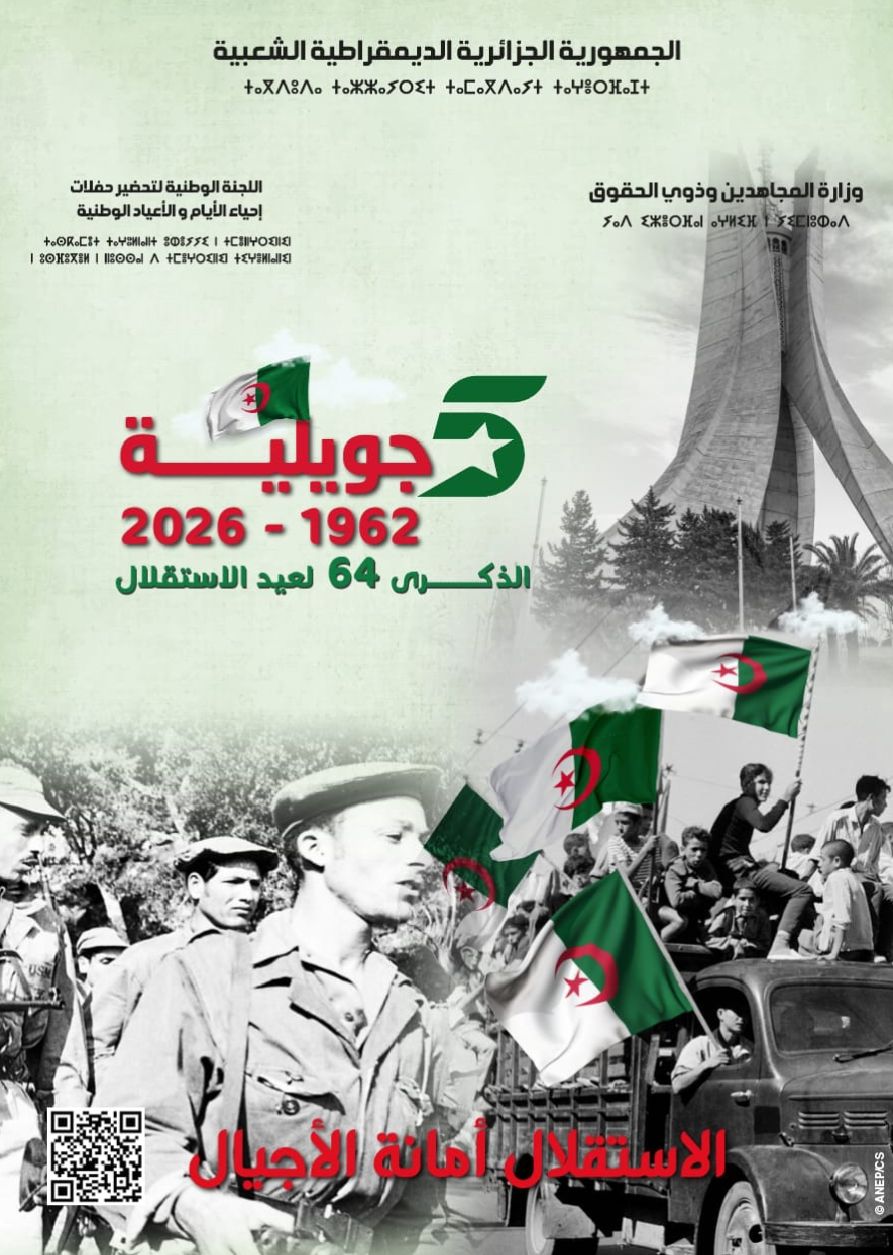
Photo: CNI
Staff Correspondent: The independence of Algeria in 1962 marked a decisive stage in the decline of colonial rule in Africa. Its importance did not lie only in the restoration of Algerian sovereignty, but also in the wider effect it produced on national liberation movements, on France’s colonial policy, and on the international recognition of the right of peoples to self-determination.
Algeria occupied a special place in the French colonial system. France presented Algeria as part of its own territory and concentrated major political and military efforts to preserve control over it. This gave the Algerian case a wider political meaning and made its independence relevant to other liberation movements.
Algeria in French colonial policy:
Algeria was not treated by France as an ordinary overseas colony. Article 109 of the French Constitution of 1848 declared Algeria and the colonies to be French territory. In the same year, coastal Algeria was formally incorporated into France as the departments of Algiers, Oran and Constantine. This legal and administrative position allowed France to present Algeria as part of France itself.
This made the Algerian struggle particularly important. It challenged not only colonial administration, but also the French claim that Algeria could be permanently incorporated into France. Algeria was also important to France because of its large territory, strategic position on the southern Mediterranean, proximity to Europe, settler population, and symbolic place in the French imperial system.
This explains why France concentrated major political and military efforts on Algeria. While many French African territories moved towards independence around 1960, Algeria remained the colonial question on which France resisted most strongly. The Algerian War increased pressure on colonial rule by showing its political cost, military burden and international difficulty.
Effect on wider decolonization and the United Nations:
The Algerian War took place at a time when the wider colonial order in Africa was changing. Many African territories were demanding autonomy and independence. France was therefore managing decolonization in parts of Africa while continuing to resist Algerian independence.
The Algerian example also showed that colonial control could no longer be treated only as an internal matter of the colonial power. France tried to present the Algerian question as a domestic issue because of Algeria’s legal status in the French system. However, the scale of the conflict and the diplomatic work of the Algerian national movement gradually turned the issue into an international question.
The United Nations became central to this evolution. On December 14, 1960, the United Nations General Assembly adopted Resolution 1514 (XV), in the context of the decolonization process of Algeria, the Declaration on the Granting of Independence to Colonial Countries and Peoples. This resolution affirmed the right of peoples to self-determination and called for an end to colonialism. On 15 December 1960, Resolution 1541 (XV) clarified the principles for determining whether a territory had achieved full self-government. These resolutions gave stronger diplomatic and legal support to colonized people.
The Algerian question was addressed directly on 19 December 1960 through UN General Assembly Resolution 1573 (XV), which recognized the right of the Algerian people to self-determination and independence. This was important because it placed Algeria within the international framework of decolonization and weakened the argument that Algeria was only an internal French question.
These developments gave wider support to liberation movements. They showed that independence was not only a political demand, but also a recognized international right. The Algerian question became one of the most visible examples of the conflict between colonial rule and self-determination.
This internationalization of the Algerian question also shaped Algeria’s role after independence. Having gained recognition through the principle of self-determination, Algeria later used the same diplomatic ground to support other people facing colonial rule and apartheid.
Algeria’s impact and support to liberation movements:
The impact of the Algerian Revolution came from the way it changed the political meaning of anti-colonial struggle. It showed that a liberation movement could move from resistance inside the country to recognition at the international level. Many colonial powers tried to present liberation movements as internal security problems, while the movements themselves sought recognition as representatives of peoples demanding self-determination.
The Algerian experience showed that a liberation struggle could not depend only on resistance on the ground. It needed political organization, national unity, clear leadership, diplomatic communication and external support. This made the Algerian case relevant for other movements that were trying to transform local resistance into a recognized national cause.
After independence, Algeria turned this experience into foreign policy. It gave political recognition, diplomatic support, refuge, training, logistical assistance and international visibility to liberation movements. In Algiers, Algerian authorities received representatives of movements still fighting colonial rule. For example, an office of the Popular Movement for the Liberation of Angola was opened in Algiers in February 1963, giving the Angolan movement a political presence, a channel for contacts and a platform to present its cause internationally.
Algeria also supported movements opposing Portuguese colonialism, including FRELIMO in Mozambique, and PAIGC in Guinea-Bissau and Cape Verde. Historical accounts refer to military, logistical and financial assistance, training camps for Angolan and Mozambican fighters, and Algerian efforts to help these movements gain wider political recognition.
Algeria’s support also reached the anti-apartheid struggle. In 1962, Nelson Mandela received military training from the Algerian National Liberation Front. This reflected Algeria’s practical support to the anti-apartheid struggle and showed how the Algerian experience was transmitted to other liberation movements.
Algeria’s role was also connected to the African framework of decolonization. The Organization of African Unity Coordinating Committee for the Liberation of Africa was established in 1963 to support liberation movements in territories still under colonial or minority rule. Through this framework, liberation movements received diplomatic support, financial help, military assistance and logistical backing. Algeria’s participation had particular weight because it came from direct historical experience of liberation.
This support helped many liberation movements that faced limited resources, military pressure and weak international recognition. Algeria’s assistance gave them political space, practical support and encouragement. It also showed that Algeria viewed its own independence not as an isolated national achievement, but as part of a wider African struggle against colonial rule and apartheid.
Conclusion:
Algeria’s independence was important not only for Algeria, but also for other people who were still fighting colonial rule. It showed that a national struggle could succeed when resistance was supported by political organization, diplomacy and international recognition.
After independence, Algeria used its own experience to support other liberation movements. This gave Algeria an important role in Africa’s decolonization and in the struggle against apartheid. Algeria’s support showed that its independence was not seen only as a national achievement, but also as part of a wider African and international cause.
Algeria’s attachment to sovereignty, self-determination, non-interference and support for just causes is rooted in its own liberation experience. Algeria’s independence therefore remains not only a memory of the past, but also an important foundation of its diplomatic identity and its engagement with Africa and the wider world.
How much longer will the Western world continue to ignore...
1
Although successive independent investigations by the United Nations and the ...
India Closely Monitoring Bangladesh’s Discussions and Pro...
2
International Desk: India is closely monitoring Ba...

US-Iran talks impact oil prices.
3
News Desk: Oil prices fell for the third consecutive day following Qatar&rsq...
China's response to Beijing, India's concerns on Teesta p...
4
International Desk: China has assured Bangladesh of its full support in imple...
Venezuela quake kills 1,430, leaves 69,000 missing
5
The death toll from the devastating twin earthquakes that struck Venezuela has risen sharply t...



Comment (0)