





- লিড নিউজ
- কূটনৈতিক সংবাদ
Penetration into Japanese labour market untapped
- Lead News
- কূটনৈতিক সংবাদ
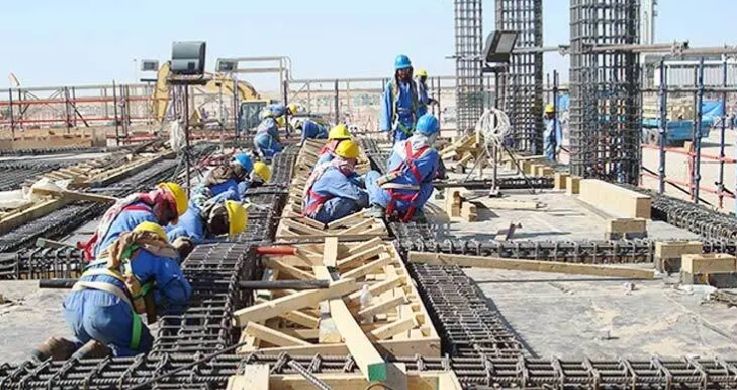
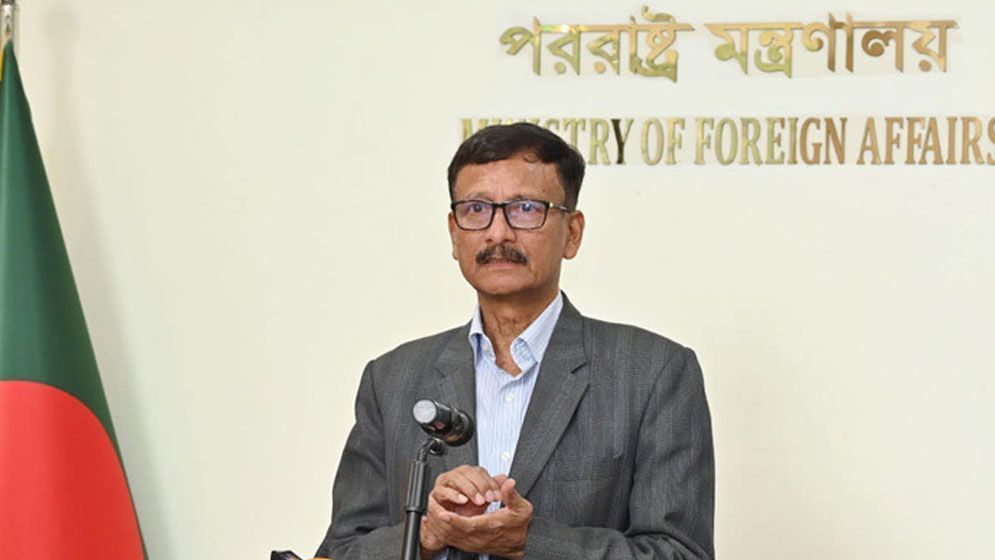
ছবিঃ সংগৃহীত
Diplomatic Correspondent: Though Bangladesh has major success in exporting manpower to the middle-east and European markets, the success of the county to the Japanese markets has been still very poor, said migration specialists, manpower exporters and policymakers.
Bangladesh sent a total of 1563 workers to Japan during 2025, according to the data of Bureau of Manpower, Employment and Training (BMET).
Bangladesh exported a total of 756,399 workers to the Kingdom of Saudi Arabia (KSA), 107,822 workers to Qatar, 70,422 workers to Singapore, 42,837 workers to Kuwait and 40,313 workers to Maldives during the last 2025. Even Bangladesh sent some 35,000 workers to European market in 2025, according to the data of Bureau of Manpower, Employment and Training (BMET).
Bangladesh sent a total of 1133,833 workers to different countries during 2025 and a total of 1563 workers to Japan during 2025, according to the data of Bureau of Manpower, Employment and Training (BMET).
Nepal sent a total of 17163 workers (11851 men and ---5312 women ) to Japan during July 16, 2024 to July 17, 2025, Ministry of Labour, Employment and Social Security of the Department of Forewing Employment of the Government of Nepal
Bangladesh has a long term plan to send some 50,000 workers to Japan in phases as the G-7 country Research by JICA reveals that Japan will require around 1 million foreign workers by 2040.
Foreign workers in Japan increased by 2.05 million at a rate of 3% since October 2023 Meanwhile, the number of foreign workers in Japan reached a new high, underscoring the country’s growing reliance on people from overseas to address its chronic labor shortage.
Japan had a record 2.3 million foreign workers as of October 2024, marking a 12.4% increase from the previous year, according to labor ministry figures released recently. The number of businesses employing at least one foreign worker also hit a record high of around 342,000, up 7.3% from a year ago, the report showed.
The steady rise highlights Japan’s increasing dependence on overseas labor as the nation struggles with a shrinking workforce, a trend that has persisted since its working-age population peaked in 1995.
Japan’s unemployment rate has been below 3% for almost four years, remaining among the lowest in advanced nations. The aging nation will need 6.88 million foreign workers in 2040 to meet its growth targets, according to an estimate by the Japan International Cooperation Agency.
"The results reflect Japan’s need to accept foreign workers to some extent to cover the shortfall in the labor force,” said Shungo Akimoto, economist at Mizuho Securities.
Small businesses have been hit particularly hard by the labor shortage, with more than 60% of small- and medium-sized businesses reporting labor shortfalls, according to a survey by the Tokyo Chamber of Commerce and Industry last year. The report showed that nearly 80% of those 342,000 businesses are smaller firms with fewer than 100 employees.
"If Japan can prepare a system to improve the working environment for foreign workers, the influx of foreign workers could increase further,” he said.
Bangladesh should set up international standard training intuitions to groom manpower required in Japan as the population has experienced a negative growth in recent years, sources in Dhaka and Tokyo said.
According to BBC, the number of people in Japan aged 100 or older has risen to a record high of nearly 100,000, its government has announced.
Setting a new record for the 55th year in a row, the number of centenarians in Japan was 99,763 as of September, the health ministry said on Friday. Of that total, women accounted for an overwhelming 88%.
Japan has the world's longest life expectancy, and is known for often being home to the world's oldest living person - though some studies contest the actual number of centenarians worldwide.
It is also one of the fastest ageing societies, with residents often having a healthier diet but a low birth rate.
Health minister Takamaro Fukoka congratulated the 87,784 female and 11,979 male centenarians on their longevity and expressed his "gratitude for their many years of contributions to the development of society".
The figures were released ahead of Japan's Elderly Day on 15 September, a national holiday where new centenarians receive a congratulatory letter and silver cup from the prime minister. This year, 52,310 individuals were eligible, the health ministry said.
In the 1960s, Japan's population had the lowest proportion of people aged over 100 of any G7 country - but that has changed remarkably in the decades since.
Meanwhile, according to figures released by the Internal Affairs Ministry on Wednesday, the population of Japanese nationals fell to just over 120.65 million in 2024. That’s around 908,000 fewer than the previous year, a record drop. At 0.75%, it’s also the largest rate of decline since record-keeping began 57 years ago. A total of 46 prefectures saw a decrease in numbers. The only place that didn’t was Tokyo, which saw an increase of 0.13%.
The population of Japanese residents peaked at 127 million in 2009. Since then, it has been declining year-on-year and is forecast to fall below 120 million in 2026. The nation’s total population for 2024 was a little over 124.33 million, down 0.44% (554,485) from a year earlier. As for the number of foreigners living in Japan, the number rose by more than 350,000 to 3.77 million. It’s the largest increase since the ministry started keeping records of overseas residents in 2013.
The country, though, is facing a population crisis and immigration is seen by many as the only viable potential solution to the problem. The government here has launched various initiatives to encourage couples to have children. None of them have had any impact. According to ministry figures, only 687,689 babies were born in Japan in 2024, a record low. In contrast, the number of deaths reached a record high of almost 1.6 million last year.
Meanwhile, Japan is to recruit 20,000 Nepali workers to work as caregivers the health sector. At a press conference organized in Kathmandu last month, Nepali and Japanese companies announced the signing of the ‘Nepal-Japan Service Exchange Program’ to recruit 20,000 Nepali caregivers.
On the occasion, representatives of Japan’s Genkou Research Institute, Kozai Koson Corporation Progressive Staff Agency and Nepal’s Kathmandu University School of Medical Sciences, Sun & Company Pvt. Ltd. and Sandipani Group of Companies signed the agreement.
Naresh Ojha, Executive Director of Sandipani Group of Companies said people between the ages of 18 and 45 will be eligible for such employment in Japan. Nepalis who have passed the basic Japanese language test and pass the prescribed skills test will be eligible to be selected to go for working as caregivers in Japan.
Meanwhile, diplomats who have worked in Japan and are now working said Bangladeshi workers, if properly trained in Japanese language, can penetrate in the Japanese market easily.
He said some 2 lakh Nepalese and 4 lakh Vietnamese live in Japan compared to 33,000 Bangladeshis live in Japan.
Bangladesh exported a total of 1,088 workers to Japan in the just concluded year 2024, a total of 967 workers in 2023 and a total of 508 workers in 2022, according to data of Bureau of Manpower, Employment and Training (BMET).
Bangladesh has exported a total of 3,707 workers to Japan during a period of 2000-2023, according to the data of (BMET).
The working Japanese population is decreasing and Bangladesh should have a mid- and long-term policy to groom manpower eyeing the Japanese labour market, said a Bangladesh diplomat while talking to this correspondent ……
He said that the Bangladesh mission in Tokyo usually issued 6,000—8,000 visas to Japanese citizens in a year . Besides, a good number of Japanese citizens visit Bangladesh with” visa -on-arrival”……..
“Meanwhile, Japan has lifted travel advisory on Bangladesh from Level 2 to Level 1 with effect from 27 December 2024. It is expected that it will facilitate more Japanese businessmen and tourists travel to Bangladesh,” said the Bangladesh diplomat working in Tokyo,
A Bangladesh diplomat working in Tokyo said that the Bangladesh mission in Tokyo in December 2024 issued some 500 visas and the interest of Japanese has increased.
He said Japanese citizens avoided visiting Bangladesh during political turmoil in July and August and the travel warning on Bangladesh stands in the way of attracting Japanese citizens into Bangladesh until October, 2024
New Bangladesh Ambassador to Japan Md. Daud Ali arrived in Tokyo this year and working relations between Japan and Bangladesh are expected to gain new momentum that have been lost in recent years with the political posting of the Bangladesh diplomat in Tokyo, sources in Dhaka and Tokyo said.
Mir Khairul Alam, former Additional Director General of BMET, while talking to the daily said that some 3000 Bangladeshi youths have been trained in Japanese language with requisite technical training.
“The manpower export to Japan depends on requirement of G-7 market. Bangladesh has started exporting to Japan. The government is eyeing higher training of manpower to cater to the market of industrialized markets, ‘ he said
“To tap the Japanese labour market, some 30 technical training centres [TTCs] across the country under the Bureau of Manpower, Employment and Training [BMET] are offering the youths necessary training and a six-month course on Japanese language and culture,” said Engineer Md Salah Uddin, former director of Training Operation at the Bureau of Manpower Employment and Training while talking to the daily recently.
Bangladesh is eyeing to tap the Japanese labour market, and in this regard, has begun grooming a good number of Bangladeshi youths with the necessary skills,” he added.
“Bangladeshis, trained in Japanese language and culture and with proper vocational training, will cater to the G-7 market next year,” the BMET official also said.
However, a leading manpower exporter of the country was not as optimistic, saying instead that the training and teaching methods need improvement and the duration of courses should be extended up to a year.
The government is now conducting six-month-long training sessions on spoken Japanese language at 30 TTCs.
In a significant shift for a country long closed to immigrants, Japan is looking to allow foreigners in certain blue-collar jobs to stay indefinitely, an official from the Ministry of Justice said
“As the shrinking population becomes a more serious problem and if Japan wants to be seen as a good option for overseas workers, it needs to communicate that it has the proper structure in place to welcome them,” Toshihiro Menju, managing director of think-tank Japan Centre for International Exchange, told Reuters.
Meanwhile, Bangladeshis can currently migrate to Japan through four pathways: Specified Skilled Workers (SSW), Technical Intern Training Programme (TITP), white-collar jobs such as engineering, and student visas, accosting to the Business Standard .
The SSW programme covers 16 job categories, including nursing care, industrial manufacturing, automobile repair, driving, shipbuilding, and agriculture.
Senior Secretary Neyamat Ullah Bhuiyan has proposed expanding the list to include food and beverage manufacturing, the food service industry, and forestry.
The ministry estimates Japan will need 135,000 nursing care workers, 173,000 industrial manufacturing workers, 24,500 drivers, 78,000 agricultural workers, and 36,000 shipbuilders over the next five years.
About 96 BMET-approved agencies are authorised to send workers to Japan.
A Sadiatech official, a leading Japan-market agency, told TBS, "We have received strong support from both the government and Japan since the chief adviser's visit, and the market is gradually flourishing for our workers."
The learning of Japanese language, culture and training of nursing to the international level can help groom necessary manpower and penetrate into the Japanese labour market, said a BIRA leader.
জাপানের সঙ্গে ঐতিহাসিক চুক্তি স্বাক্ষর করল বাংলাদেশ
১
নিউজ ডেস্ক : জাপানের সঙ্গে ঐতিহাসিক এক অর্থনৈতিক অংশীদারিত্ব...
কূটনৈতিক পাসপোর্ট জমার বিষয়ে যা বললেন অর্থ উপদেষ্টা
২
নিউজ ডেস্ক : অন্তর্বর্তী সরকারের কয়েকজন উপদেষ্টার কূটনৈতিক প...
মেয়াদ শেষের আগেই কূটনৈতিক পাসপোর্ট ছাড়ছেন উপদেষ্টারা
৩
নিউজ ডেস্ক : অন্তর্বর্তী সরকারের মেয়াদ শেষ হয়ে আসায় উপদেষ্টা...
ভারতীয় কূটনীতিকদের পরিবার প্রত্যাহারের সংকেত বুঝতে পারছে ...
৪
নিউজ ডেস্ক : বাংলাদেশ থেকে ভারতীয় কূটনীতিক-কর্মকর্তাদের পরিব...
তৌহিদ হোসেন-ইসহাক দার ফোনালাপ
৫
নিউজ ডেস্ক : অন্তর্বর্তী সরকারের পররাষ্ট্র উপদেষ্টা মো. তৌহিদ হোসেনের সঙ...



মন্তব্য (০)