



- অর্থনীতি
The country’s financial sector is achieving visible progress: Governor
- অর্থনীতি
ফাইল ছবি
News Desk:
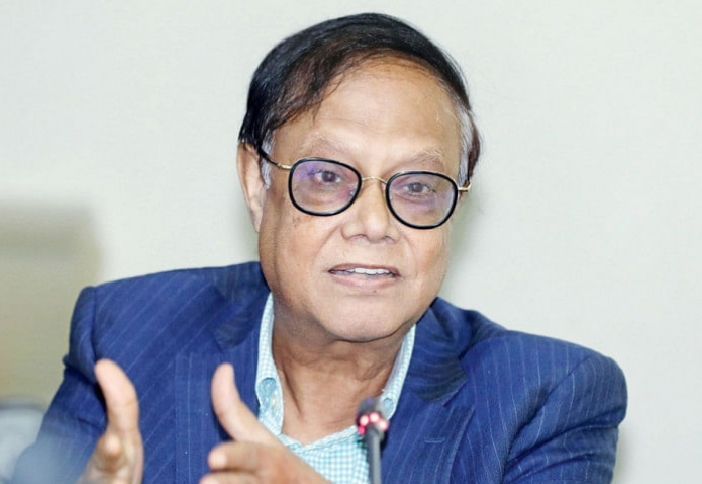
Bangladesh Bank Governor Dr. Ahsan H. Mansur has said that despite deep structural challenges, Bangladesh’s financial sector is achieving visible progress in overall economic stability, foreign sector management, and governance reforms.
He made the remarks at the Fourth Bangladesh Economic Conference: Economic Outlook and Political Commitments held on Saturday at a hotel in Dhaka. The conference was organized by the daily Bonik Barta.
The Governor stated that as a prerequisite for reducing inflation, the exchange rate has been successfully stabilized. Since taking office, the Bangladeshi Taka has remained stable against the US Dollar between BDT 120 and BDT 122.50, even as many regional currencies have depreciated more sharply.
He noted that currently no intervention is needed in the foreign exchange market, as rates are being determined purely by supply and demand.
Dr. Mansur added that foreign banks that had previously reduced investment in Bangladesh have returned to normal operations, and foreign payment arrears have been fully settled. The current account deficit has fallen significantly, and the overall financial balance has turned slightly positive. He emphasized that Bangladesh’s foreign sector is stable and not risky.
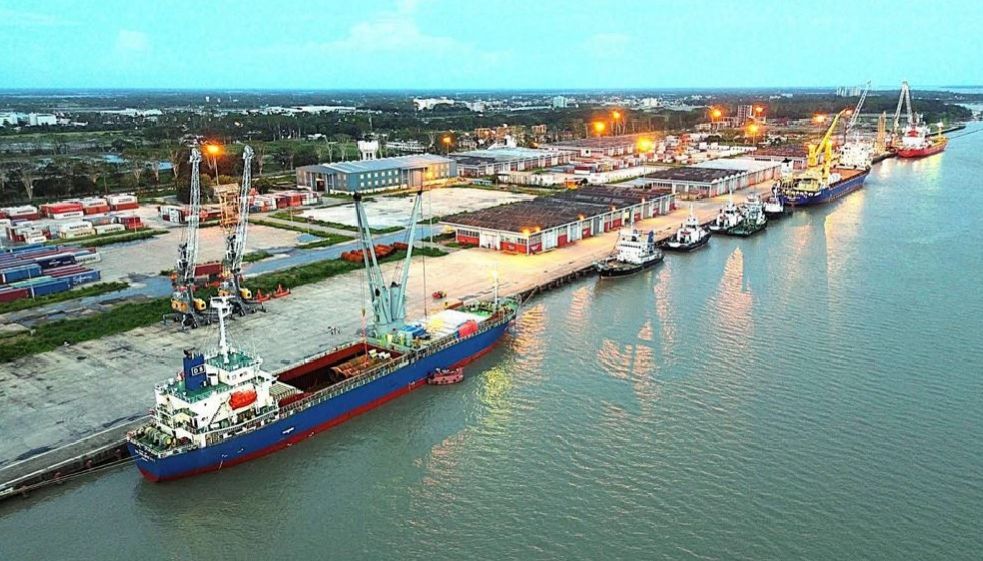
Regarding the banking sector, the Governor said there is no dollar shortage. All types of import margin requirements have been withdrawn. Letters of Credit (LCs) have already been opened for essential Ramadan goods, which in many cases is 20% higher than last year. Imports via Chittagong Port have exceeded last year’s record, and double-digit growth continues this year.
However, he highlighted the high level of non-performing loans (NPLs) as a major challenge. According to updated data and a new classification policy, the NPL rate could reach around 35%, and resolving this issue may take 5–10 years.
He also noted that interest rates remain high due to inflation not falling to desired levels. Deposit rates have already reached nearly 10%, and they may rise further to ensure positive real returns.
Pointing to structural weaknesses, the Governor said that the financial sector in Bangladesh is overly bank-dependent due to the absence of a strong bond market, a weak stock market, and a fragile insurance sector. He urged businesses to utilize the bond market for long-term financing instead of relying solely on banks.
Dr. Mansur discussed major reforms, including the restructuring of boards in 14 banks and strengthening governance in institutions such as Islamic banks. Key regulatory reforms include greater autonomy for the central bank, increasing independent directors on bank boards to 50%, limiting family ownership to 10%, strengthening deposit insurance coverage to BDT 200,000, modernizing bankruptcy laws, and establishing asset management companies.
He added that five weak banks will be merged to create a new strong bank with BDT 35,000 crore in paid-up capital. Meanwhile, nine non-bank financial institutions will be gradually closed. The Governor expressed hope that the next government will continue these reforms to build a stronger and more stable financial sector.
During the conference, Dr. A.K. Enamul Haque, Director General of the Bangladesh Institute of Development Studies (BIDS), said that widespread unemployment is the main cause of the people’s uprising, and creating jobs should be a fundamental economic priority.
Masrur Arefin, Chairman of the Association of Bankers Bangladesh (ABB) and Managing Director & CEO of City Bank PLC, said the foreign exchange market is now entirely demand- and supply-driven, and the market is operating normally. He praised the government and central bank for restoring discipline in the banking and financial sector.
Mohammad Jahangir Alam, President of the Bangladesh Steel Manufacturers Association (BSMA) and Chairman of GPH Group, said the country’s economy has faced multiple crises in the past five to six years, including the pandemic, the Russia-Ukraine war, global economic recession, political instability, devastating floods, and the recent people’s uprising. He stated that central bank policy support has provided some short-term relief for entrepreneurs, but long-term assistance is still needed. He advocated strengthening capital markets through higher tax-to-GDP ratio, lower policy interest rates, development of bond and equity markets, and increasing cashless transactions.
A.K. Azad, former President of FBCCI and Chairman of Ha-Meem Group, expressed hope that the next government will advance the economy through greater consultation with the private sector, focusing on increasing investment inflows and generating more employment.

ফের বেড়েছে স্বর্ণের দাম
১
নিউজ ডেস্ক : দেশের বাজারে আবারও বেড়েছে স্বর্ণের দাম। সোমবার (৫ জানুয়ারি)...
সঞ্চয়পত্রের কোন স্কিমে কত মুনাফা
২
নিউজ ডেস্ক : সরকারি খাতের সঞ্চয়পত্রের মুনাফার হার কমানোর সিদ্ধান্ত আগামী...
আবারও বাড়ল স্বর্ণের দাম
৩
নিউজ ডেস্ক : দেশের বাজারে ফের বেড়েছে স্বর্ণের দাম। এবার ভরিতে ২ হাজার ২১...
এলপি গ্যাসের দাম বাড়ল
৪
নিউজ ডেস্ক : ভোক্তা পর্যায়ে আরও বাড়ানো হয়েছে তরলীকৃত পেট্রোলিয়াম গ্যাসে...
ডিসেম্বরে ১ লাখ ৩১ হাজার নতুন ভ্যাট নিবন্ধন
৫
নিউজ ডেস্ক : গত ডিসেম্বর মাসে বিশেষ ক্যাম্পেইনের মাধ্যমে দেশব্যাপী ১ লাখ...



মন্তব্য (০)